
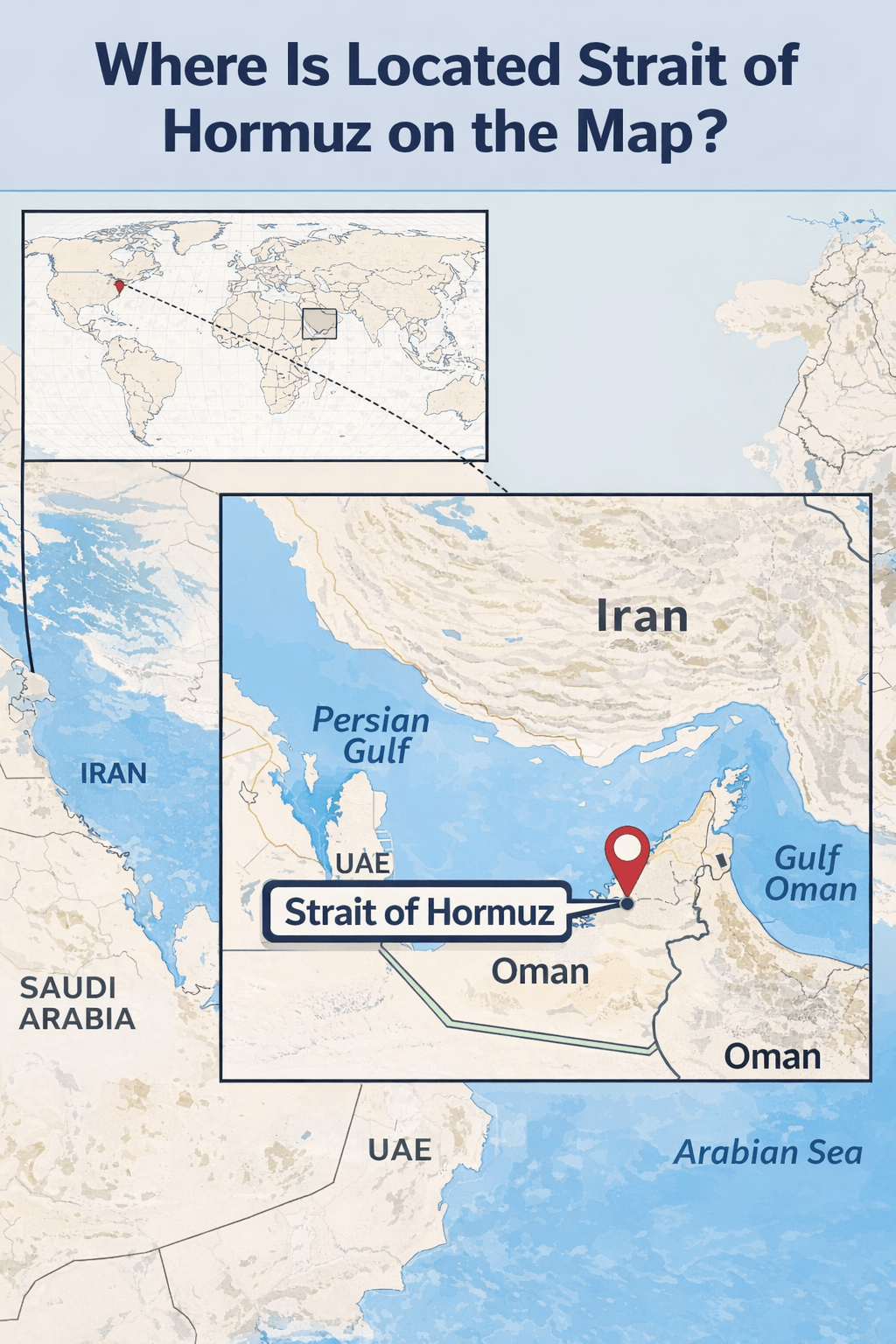
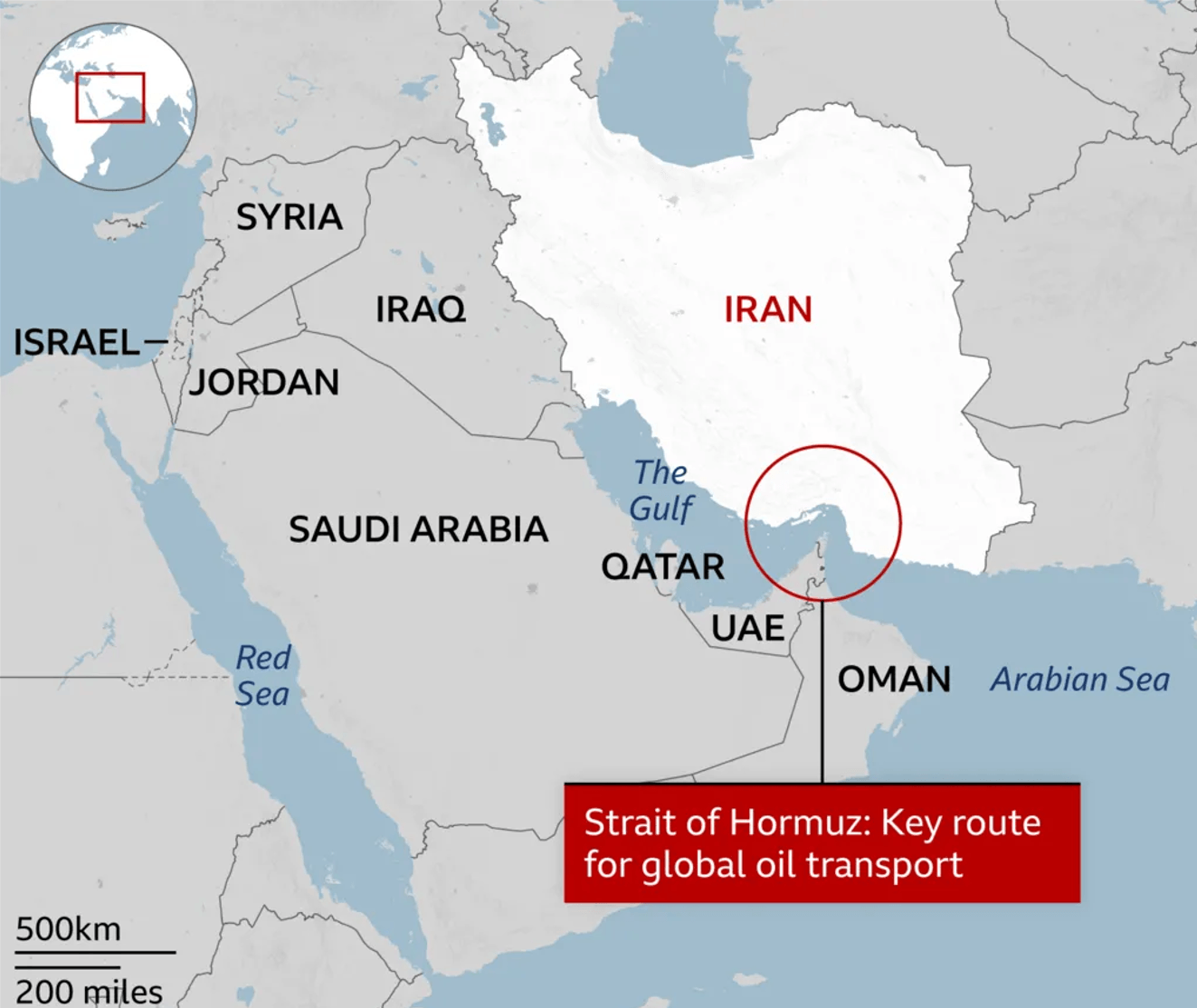
The Strait of Hormuz is one of the most strategically important waterways in the world, connecting the Persian Gulf to the Gulf of Oman and the Arabian Sea. Located between Iran to the north and Oman and the United Arab Emirates to the south, this narrow strait serves as a crucial passage for global oil shipments, with a significant portion of the world’s petroleum exports passing through it every day.
Because of its geographic position and economic importance, the Strait of Hormuz is frequently mentioned in discussions about global trade, energy security, and Middle Eastern geopolitics. Understanding where the Strait of Hormuz is located helps explain why this narrow maritime corridor plays such a vital role in international shipping and global energy supply.
Strait of Hormuz – GLOBAL CRISIS (2026) | Global Oil and LNG at Risk | 4K
Watch this video directly on YouTube
Watch on YouTubeFor the best viewing experience, watch the full video on the World Guide YouTube channel at youtube.com/@WorldGuide.
Which country is the Strait of Hormuz in?
Who uses the Strait?
Roughly 20% of the world’s oil and liquefied natural gas (LNG) flows through the Strait of Hormuz. This energy supply originates not only from Iran, but also from major Gulf producers such as Iraq, Kuwait, Qatar, Saudi Arabia, and the United Arab Emirates. In 2025, an estimated 20 million barrels of oil passed through the strait each day, according to the U.S. Energy Information Administration (EIA), representing nearly $600 billion (£447 billion) in annual energy trade.
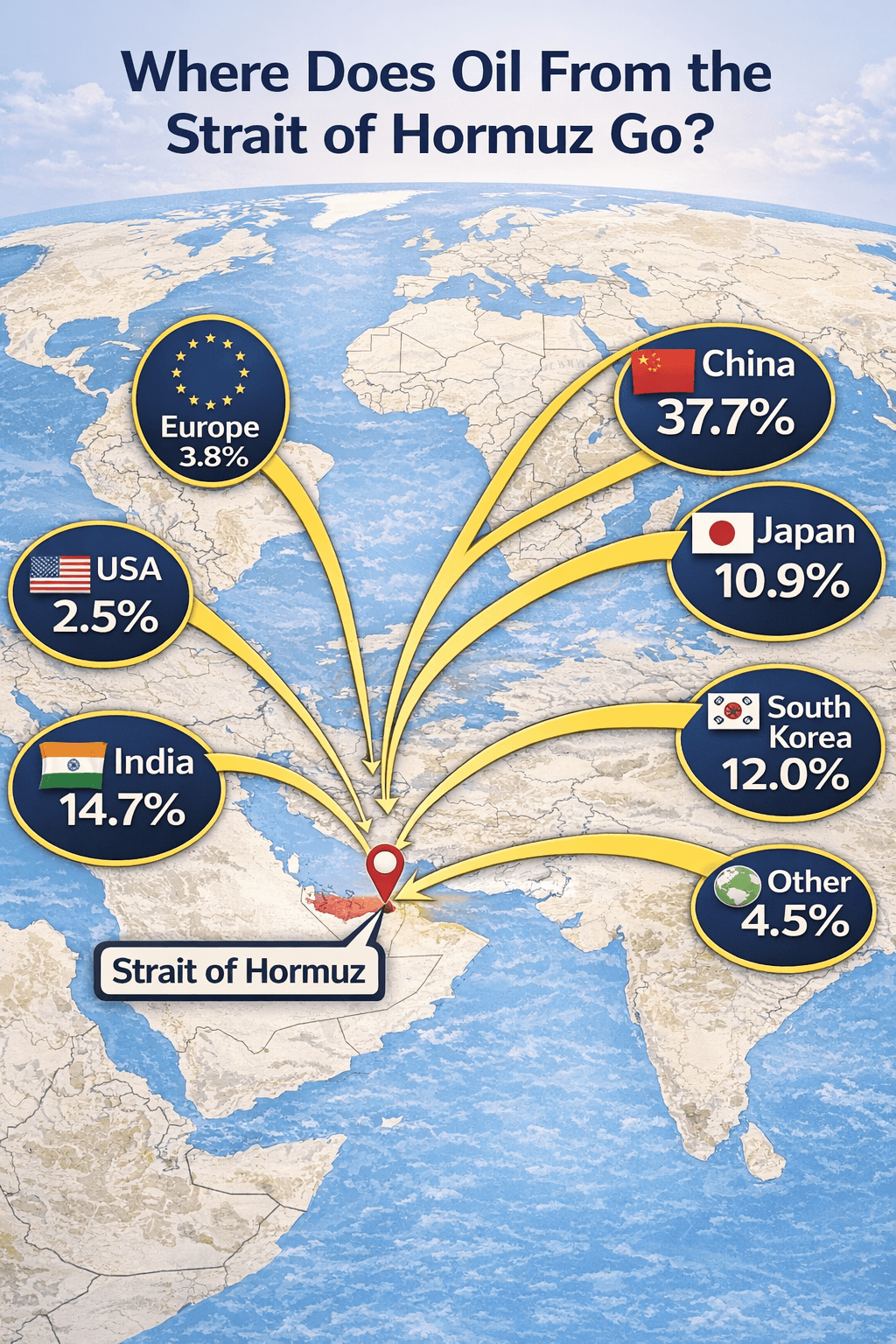
The Strait of Hormuz is one of the world’s most critical energy chokepoints, serving as a major transit route for both crude oil and liquefied natural gas (LNG) flowing from the Middle East to global markets. The majority of these energy exports are directed toward Asia, with countries like China, India, Japan, and South Korea receiving the largest shares, while smaller volumes reach Europe and the United States. Understanding where oil and LNG from the Strait of Hormuz go reveals the region’s vital role in powering the global economy and highlights how any disruption in this narrow passage can significantly impact international energy supply, trade routes, and global price stability.
The global distribution of oil transported through the Strait of Hormuz, one of the world’s most critical energy chokepoints, and clearly shows that the vast majority flows to Asia. China receives the largest share at 37.7%, followed by India (14.7%), South Korea (12.0%), and Japan (10.9%), demonstrating Asia’s overwhelming dependence on this route. Smaller portions are directed to Europe (3.8%), the United States (2.5%), and other regions (4.5%), making up the remainder of global flows. Overall, the visualization underscores how this narrow strait plays a central role in supplying energy to the world’s largest economies, meaning any disruption here could have immediate and widespread effects on global oil markets.
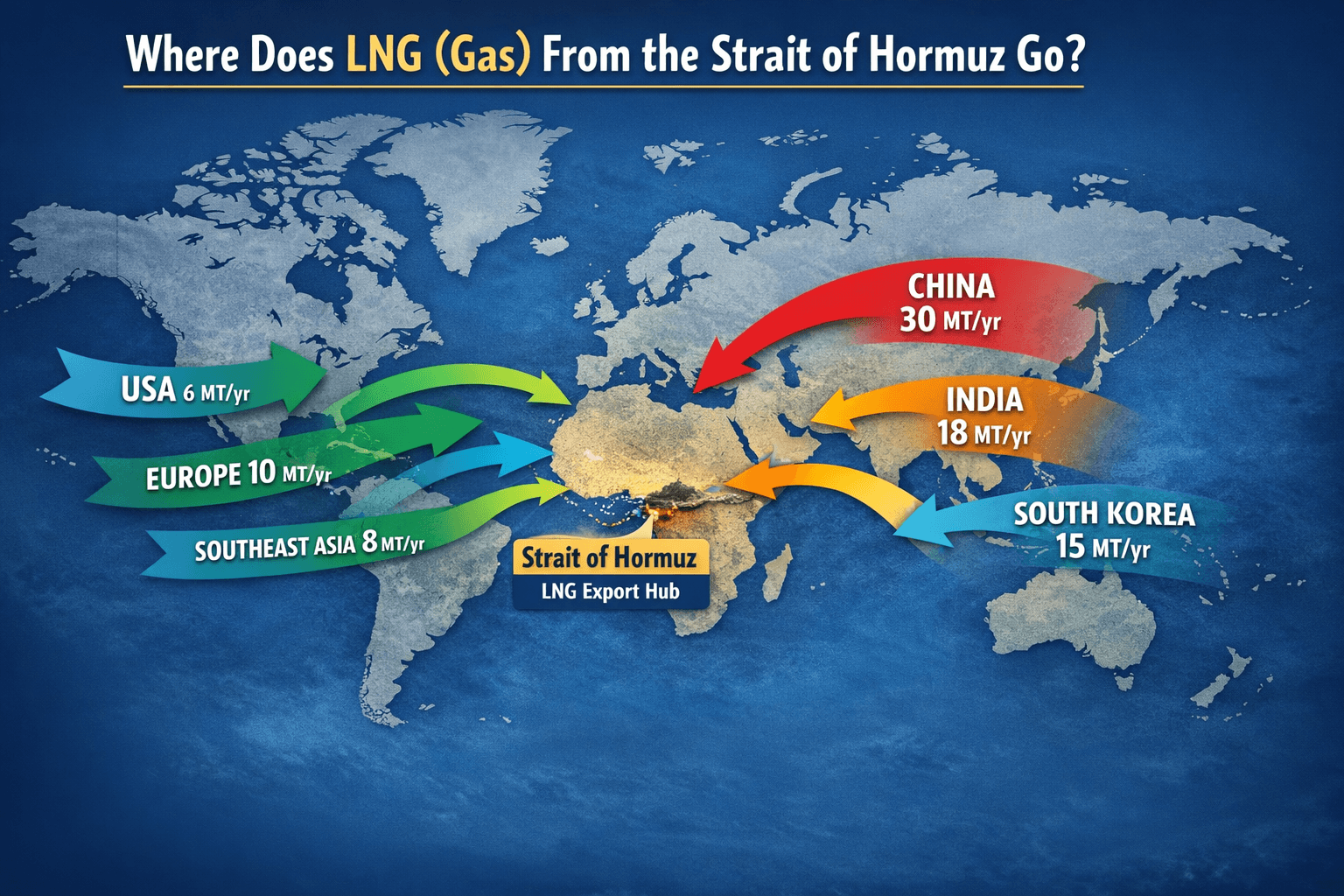
The global distribution of liquefied natural gas (LNG) exports from the Strait of Hormuz, showing how this critical energy corridor supplies major economies worldwide. The largest share flows to China (30 MT/yr), followed by Japan (20 MT/yr), India (18 MT/yr), and South Korea (15 MT/yr), highlighting Asia’s dominant role in LNG demand. Additional volumes are directed toward Europe (10 MT/yr), Southeast Asia (8 MT/yr), and the United States (6 MT/yr), demonstrating a broader but smaller distribution across other regions. Overall, the visualization emphasizes that the Strait of Hormuz is not only vital for oil but also a key global hub for LNG trade, where any disruption could significantly impact energy supply chains and international markets.
Why is the Strait of Hormuz Important Right Now?
The Strait of Hormuz is crucial today because it carries a large share of global oil shipments, making it highly sensitive to geopolitical tensions.
What Happens if the Strait of Hormuz Closes?
If the Strait of Hormuz closes, global oil supply would be severely disrupted, causing sharp increases in energy prices and economic instability.
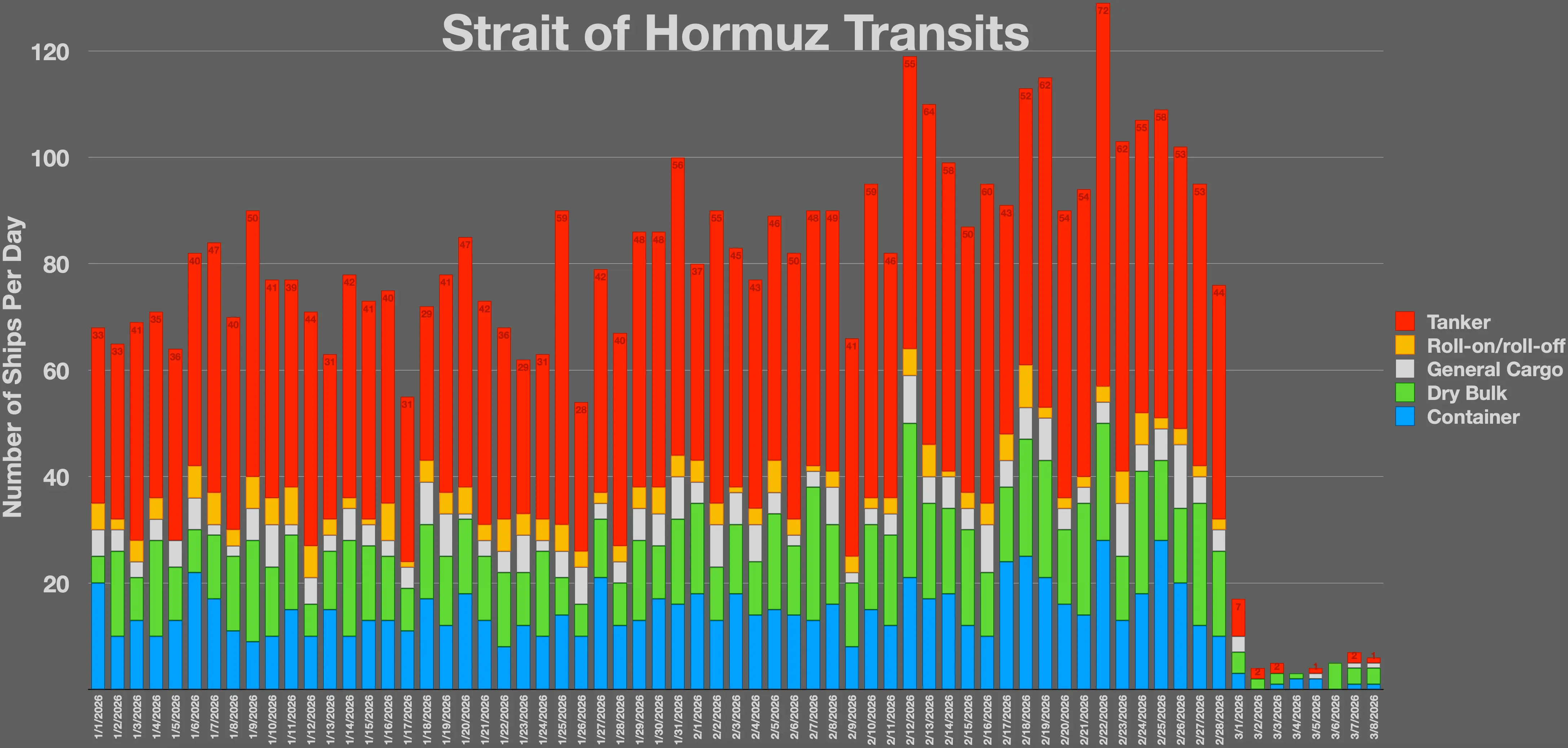
Around 3,000 ships typically pass through the Strait of Hormuz each month, although traffic has recently declined sharply due to rising tensions and threats from Iran targeting tankers and commercial vessels. Meanwhile, energy prices have remained significantly higher than pre-conflict levels. According to Reuters, crude oil prices have climbed to around $100 per barrel—an increase of nearly 70% this year and about 50% compared to the previous year.
Gulf nations, including Iran, depend heavily on energy exports as a key source of revenue. Any disruption or blockade of the strait would have major global consequences, particularly for Asia. China, for example, is estimated to purchase around 90% of Iran’s oil exports. Since this oil is used to manufacture goods that are then exported worldwide, rising oil prices could ultimately lead to higher costs for consumers across the globe.
How does Iran control the strait?
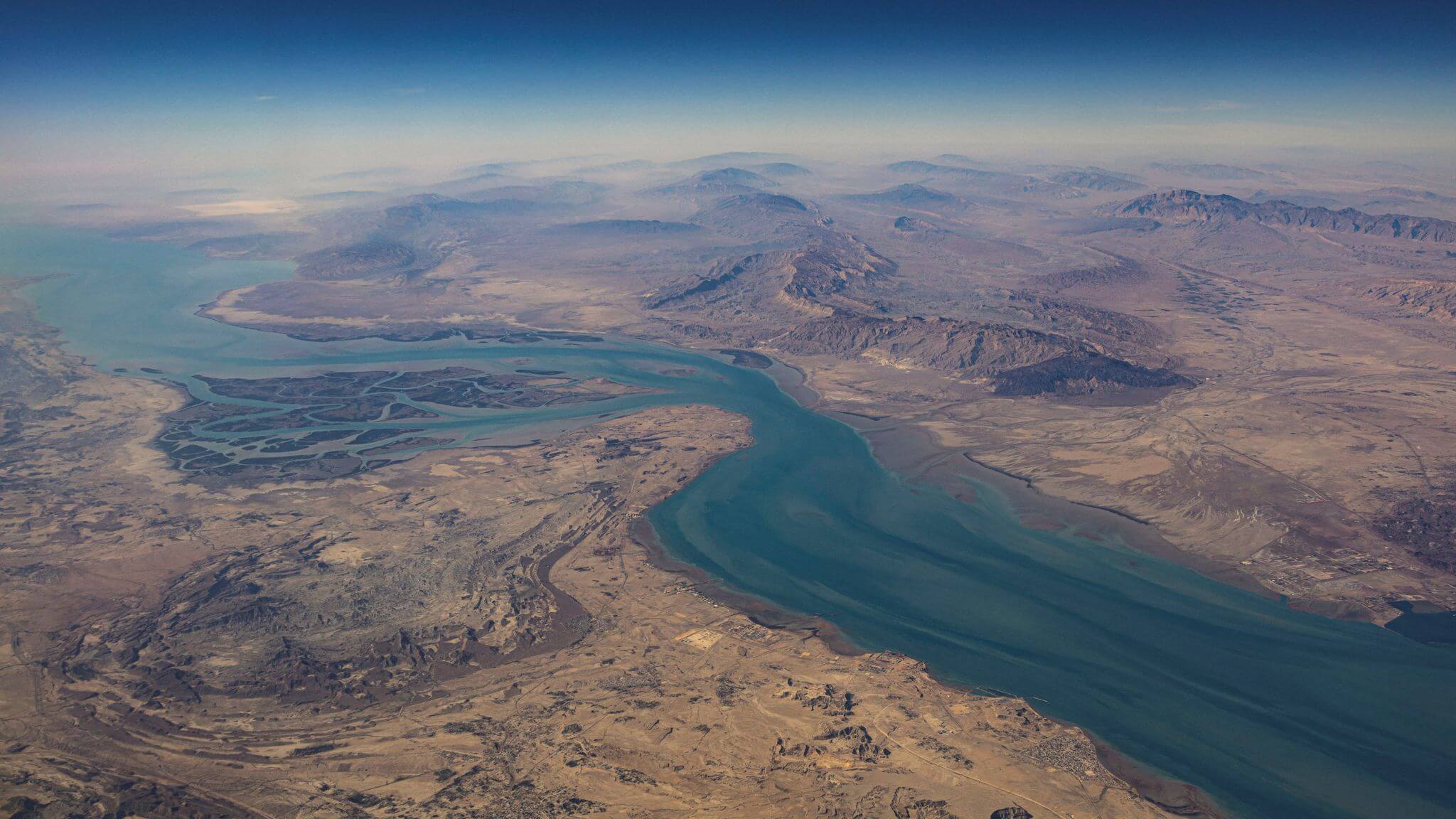
Under international law, countries are permitted to exercise control over their territorial seas up to 12 nautical miles (approximately 13.8 miles) from their coastline. At its narrowest point, the Strait of Hormuz and its main shipping lanes fall entirely within the territorial waters of Iran and Oman. Experts suggest that one of the most effective ways Iran could militarily restrict the strait would be by deploying naval mines, using fast attack boats and submarines. These fast boats are often equipped with anti-ship missiles, increasing their potential threat to passing vessels.
How is the US trying to reopen the strait?
So far, the United States has not deployed warships directly into the Strait of Hormuz, instead limiting its response to airstrikes targeting Iranian military assets, including naval capabilities. For example, on March 18, the US military reported striking Iranian anti-ship cruise missile sites along the strait. A recent appeal by US President Donald Trump for other nations—including both allies and China—to contribute naval forces to secure the waterway received little support, after which he stated that such assistance was not necessary.
Historically, however, the United States has used its naval power to ensure the free flow of maritime traffic through the strait. During the late 1980s, in the final years of the Iran-Iraq War, attacks on oil infrastructure escalated into the so-called “Tanker War,” with both sides targeting neutral shipping to apply economic pressure. Kuwaiti tankers transporting Iraqi oil were particularly at risk, prompting the US Navy to begin escorting them through the Gulf. This effort became one of the largest naval surface operations since World War II, according to the US Naval Institute.
Can Energy Exports Bypass the Strait of Hormuz?
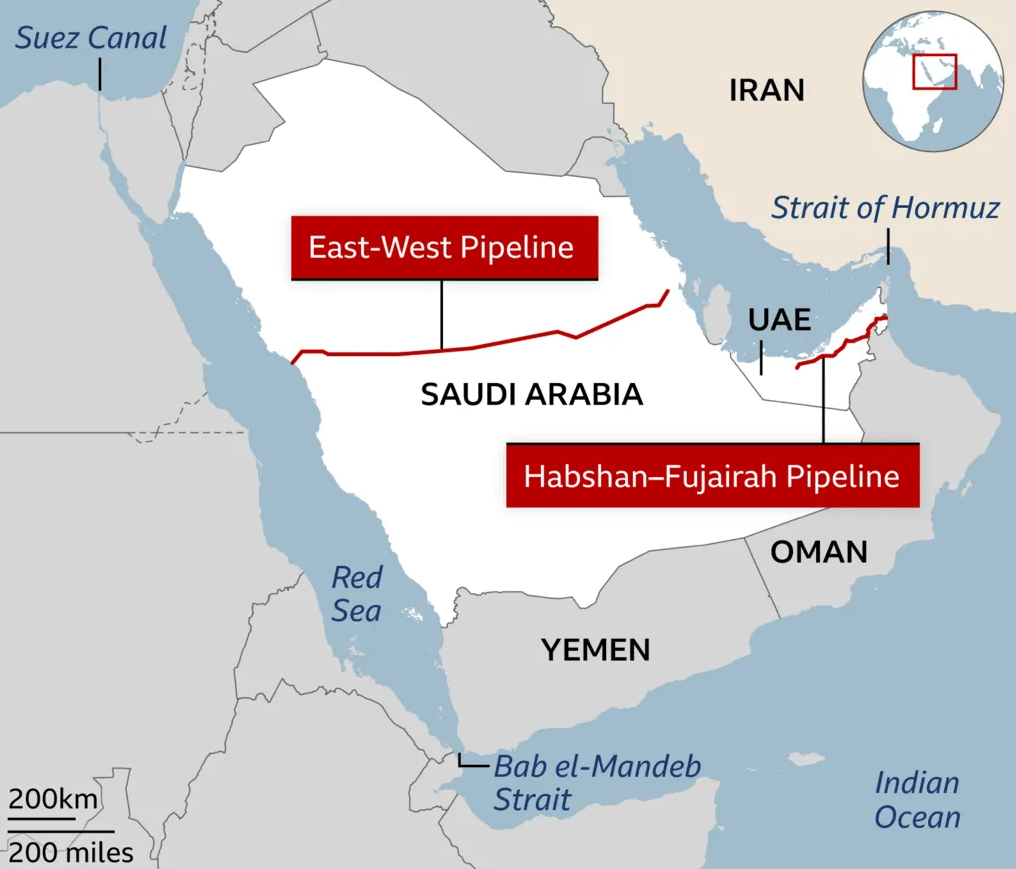
The ongoing risk of disruption in the Strait of Hormuz has led Gulf oil-exporting countries to invest in alternative overland routes. Saudi Arabia, for example, operates the 1,200-kilometer East–West Crude Oil Pipeline, which can transport up to five million barrels of oil per day, according to US government data, and has previously converted a natural gas pipeline for crude transport when needed. Similarly, the United Arab Emirates has developed a pipeline linking its inland oil fields to the port of Fujairah on the Gulf of Oman, with a capacity of at least 1.5 million barrels per day.
While these alternative routes can help bypass the Strait of Hormuz, they are not sufficient to fully replace it. Reuters reports that diverting oil through these systems could still result in a supply shortfall of 8 to 10 million barrels per day. In addition, infrastructure such as the Fujairah terminal has faced disruptions in the past, including drone attacks, highlighting the ongoing vulnerability of alternative export routes.
Who buys most of Iran’s oil?
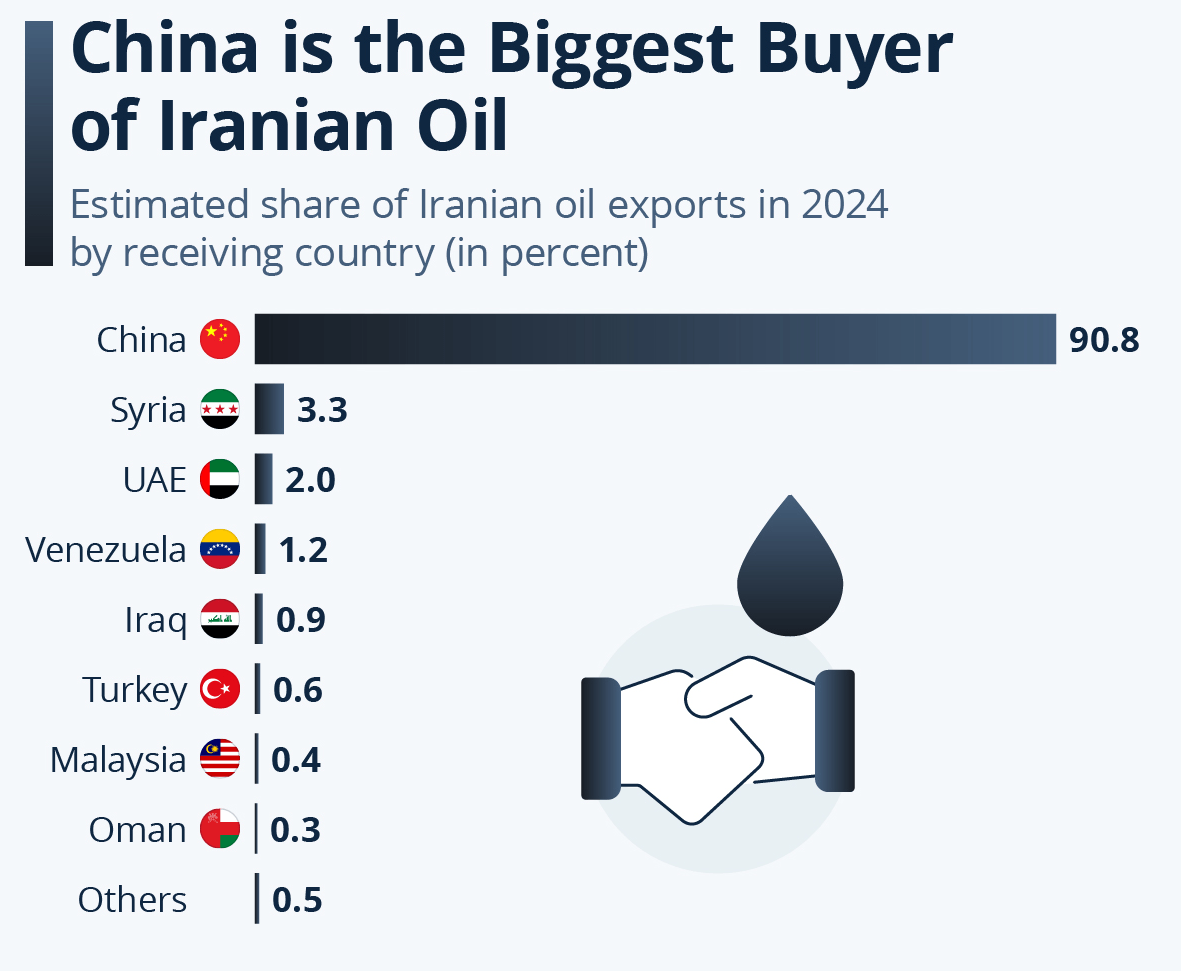
Data compiled by Visual Capitalist shows that China is by far the largest importer of Iranian oil, accounting for roughly 91% of Iran’s total exports in 2024. Syria ranks as a distant second with about 3.3%, followed by the United Arab Emirates at 2%, while Venezuela holds a smaller share of around 1.2%. Other countries—including Iraq, Turkey, Malaysia, and Oman—each represent less than 1% of Iran’s oil exports. Over the past several decades, Iran has faced extensive international sanctions, particularly from the United States, with additional restrictions imposed between 2018 and 2020. These sanctions have significantly limited Iran’s trading partners, leaving only a small group of countries willing and able to import its oil despite the country being one of the world’s major energy producers.
What Are the Alternatives to the Strait of Hormuz for Oil and Gas?
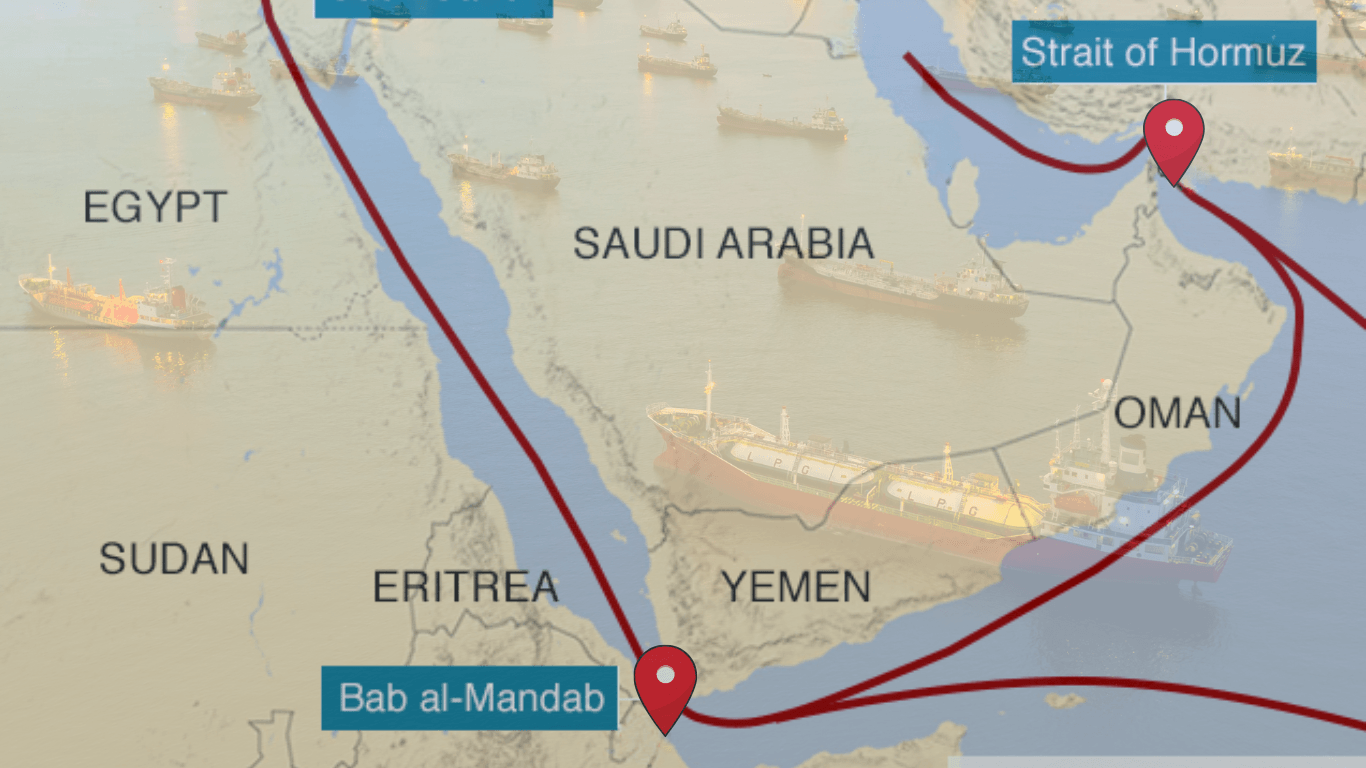
Key Alternative Routes:
- Saudi East-West Pipeline (Petroline): Extends from Abqaiq to Yanbu on the Red Sea. It has a capacity of 5–7 million barrels per day (mb/d), making it the most significant alternative.
- Habshan–Fujairah Pipeline (ADCOP): Connects onshore UAE oil fields directly to the port of Fujairah on the Gulf of Oman, bypassing the strait entirely with a capacity of 1.8–2 million barrels per day.
- Omani Ports: Deep-water ports in Oman, such as Duqm, Salalah, and Sohar, provide access to the Arabian Sea outside the strait, serving as alternative hubs for shipping and road transport.
- Iraq-Turkey Pipeline (Kirkuk–Ceyhan): Moves oil from northern Iraq to the Mediterranean, although this does not service the Persian Gulf producers directly
What happens if the Strait of Hormuz is blocked?
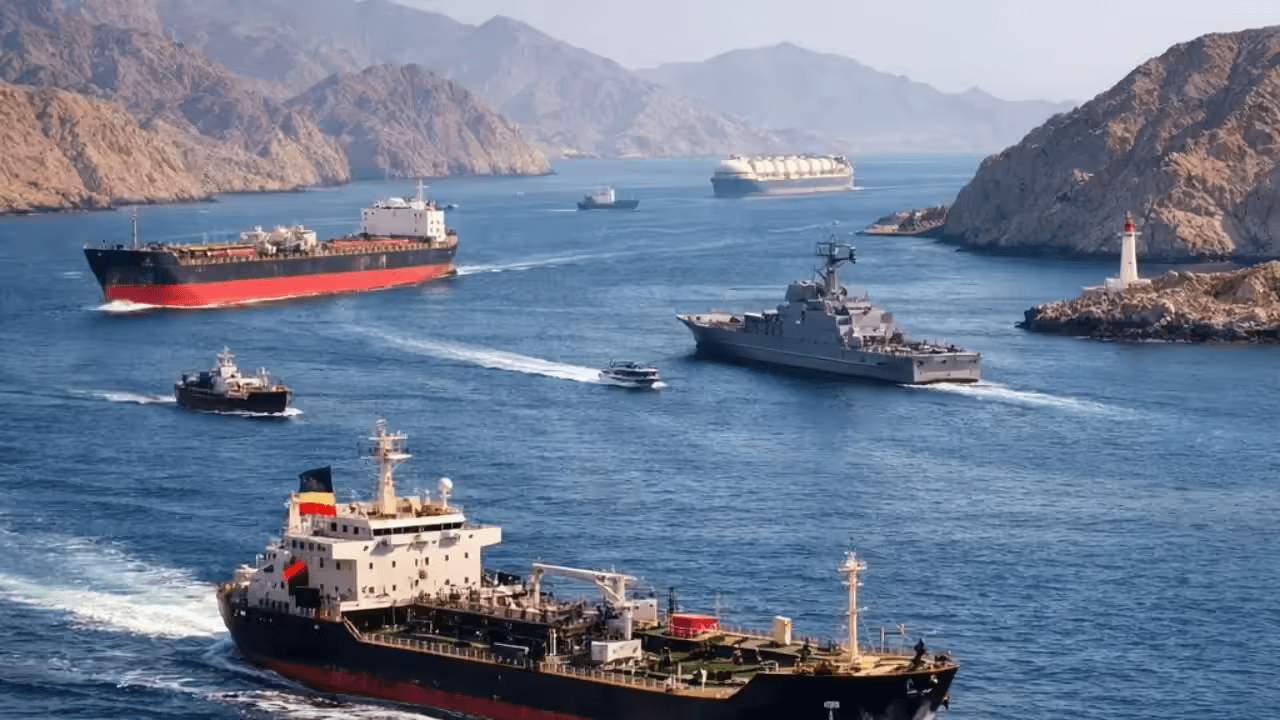
Massive Energy Supply Shock: Approximately 13 million barrels per day of crude oil and roughly 20% of global liquefied natural gas (LNG) exports are halted, heavily impacting supplies for Asia and Europe.
- Spiking Global Energy Prices: Oil prices are expected to jump over $100/barrel. Even countries not directly importing from the Gulf will face significant price increases due to global market reliance, causing severe economic damage, especially in Asia (e.g., Thailand, India).
- Supply Chain & Economic Disruption: A shutdown causes a “paralyzing” situation for manufacturing and the defense industrial base. The shortage of fertilizer, which is also shipped through the area, threatens global food security.
- Regional & Shipping Disruptions: Traffic through the strait can drop by as much as 97%, with Iran restricting passage, causing major shipping companies to halt traffic and reroute vessels, adding costs and time.
- Global Inflationary Pressures: The shock could create a stagflationary effect, forcing high prices for goods and impacting consumers worldwide
Where is located Strait of Hormuz on the Google Map?
Feel free to explore these pages as well:
- Kharg Island Map ↗️
- Where is Kharg Island ↗️
- Strait of Hormuz Map ↗️
- Iran Map ↗️
- Iran High-resolution Map ↗️
- Where is Iran ↗️
- Iran Political Map ↗️
- Iran Physical Map ↗️
- Iran Population Map ↗️
- Iran Ethnic-groups Map ↗️
- Iran Cities Map ↗️
- Iran Regions Map ↗️
- Iran Blank Map ↗️
- Tehran Map ↗️
- US and Israeli strikes on Iran in maps ↗️
- Iraq ↗️
- Israel High-resolution Map ↗️
- Iran Historical Map ↗️
- Iraq High-resolution Map ↗️
- Iran Time-zone Map ↗️
- Iran Israel War Map – Location Strikes Map in Iran and Israel ↗️
- Syria Map ↗️
- Israel Map ↗️
- Saudi Arabia Map ↗️
- Where is Located Qatar in the World? ↗️
- United States Map ↗️
- Türkiye Map ↗️
- Europe Map ↗️
- Asia Map ↗️

