
The US Population Density Map page offers a comprehensive collection of detailed and high-resolution maps designed to help you explore population patterns across the country. From a United States population density heatmap high resolution and USA county level population density map detailed to visual styles like the USA population density blue gradient map, USA population density dot distribution map, and USA population density multicolor choropleth map, this page covers every perspective.
US population density map
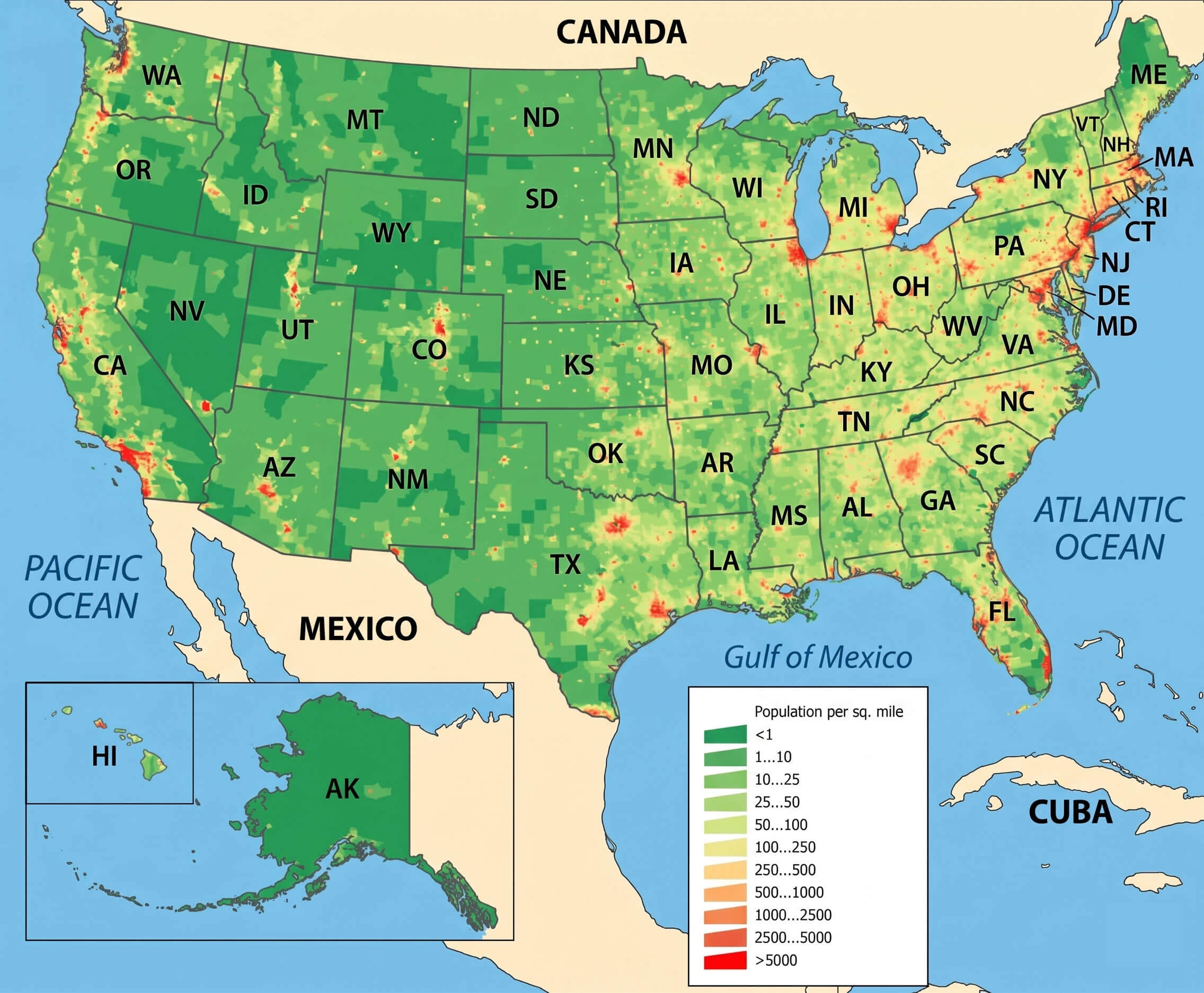
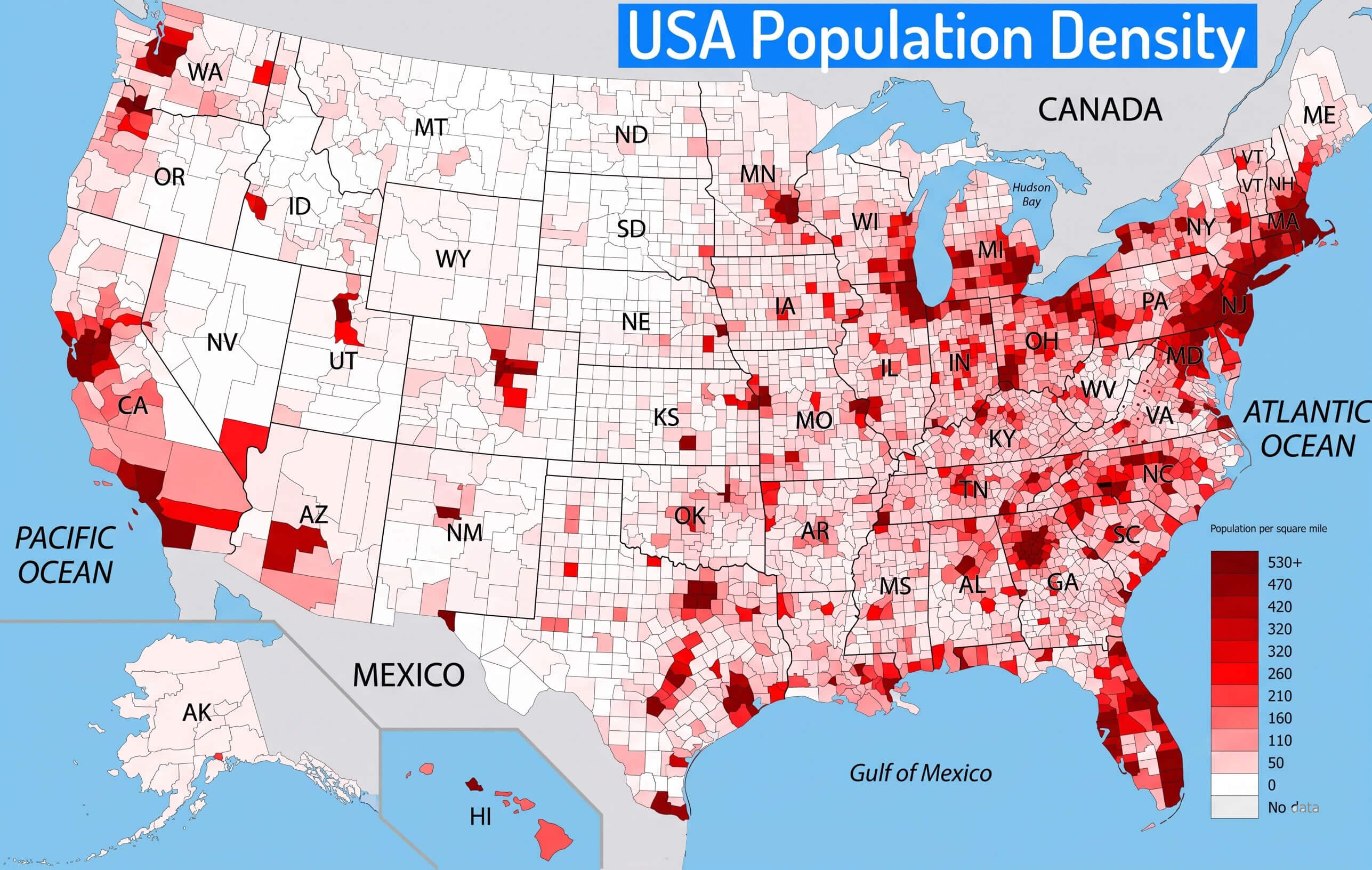
US population density map with states
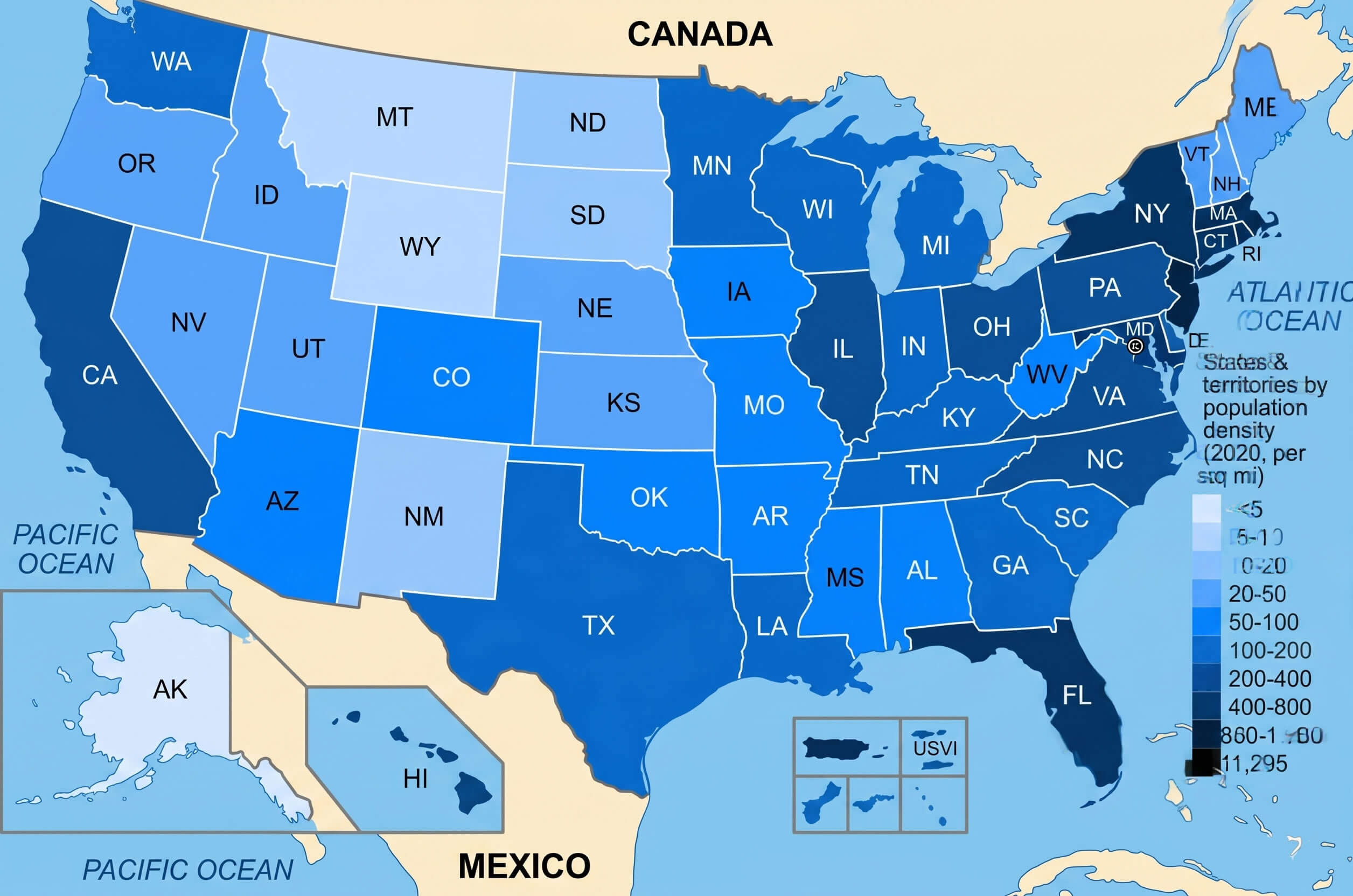
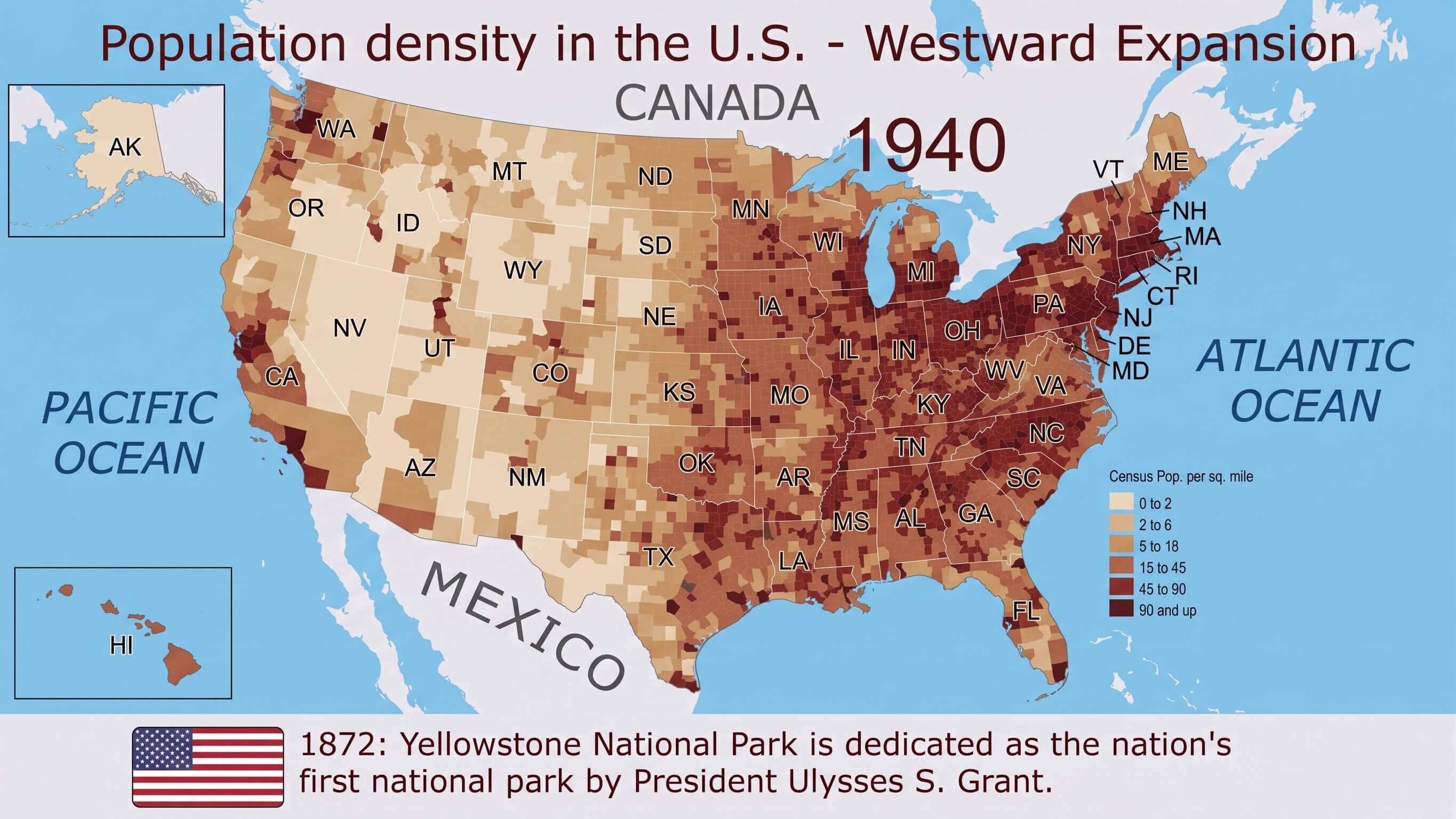
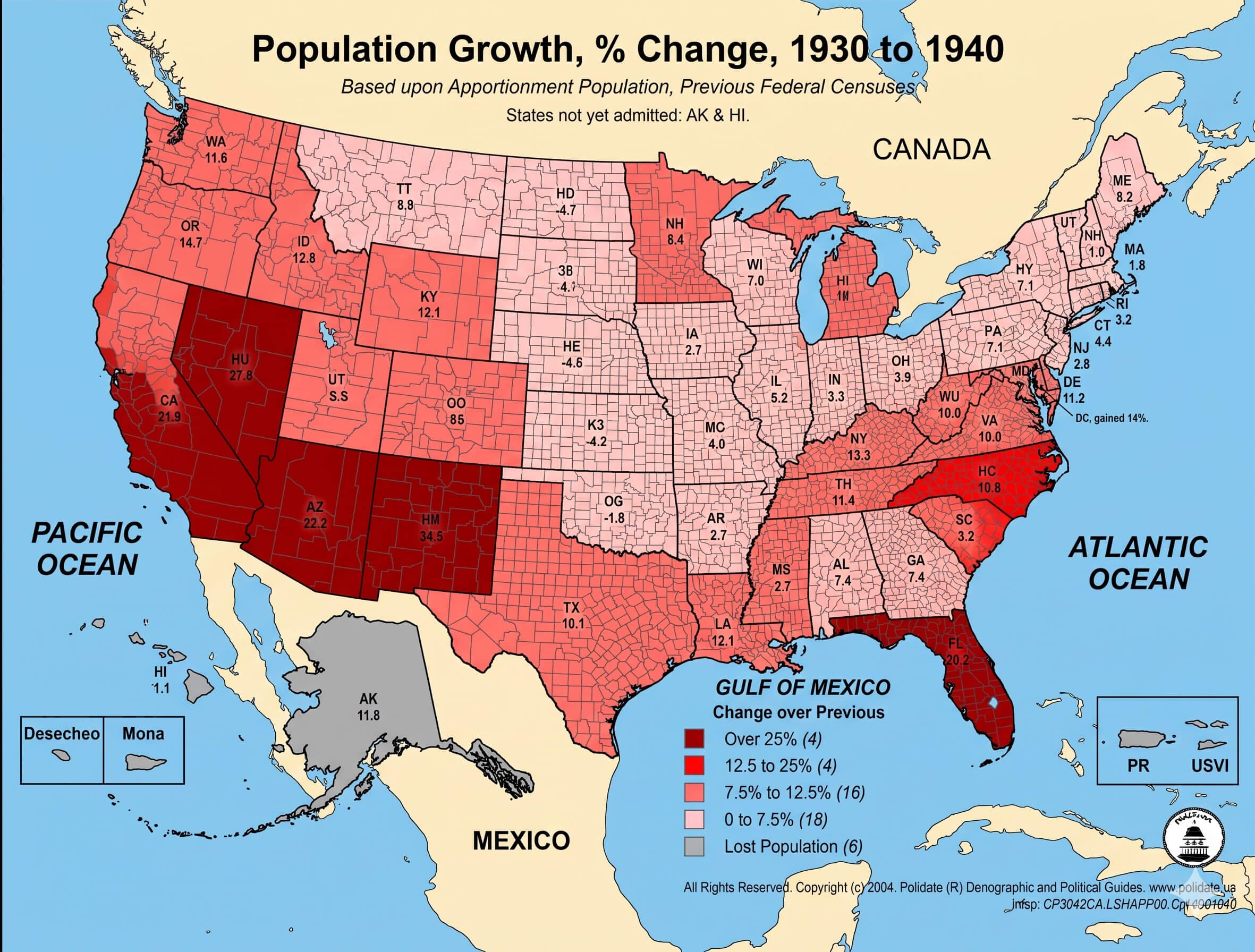
You can also examine historical trends with maps such as US population density westward expansion 1940 map and US population growth 1930 to 1940 map, alongside modern insights like the US state population map 2024 and Top 10 most populous US states bar chart. Additional resources include the US population density by county 2010 census map, US population density infographic, and US urban population density clusters map, as well as broader comparisons like the North America population density map US Canada and World population density map global comparison, making this page a complete guide to understanding demographic distribution in the United States.
US state population growth and distribution map
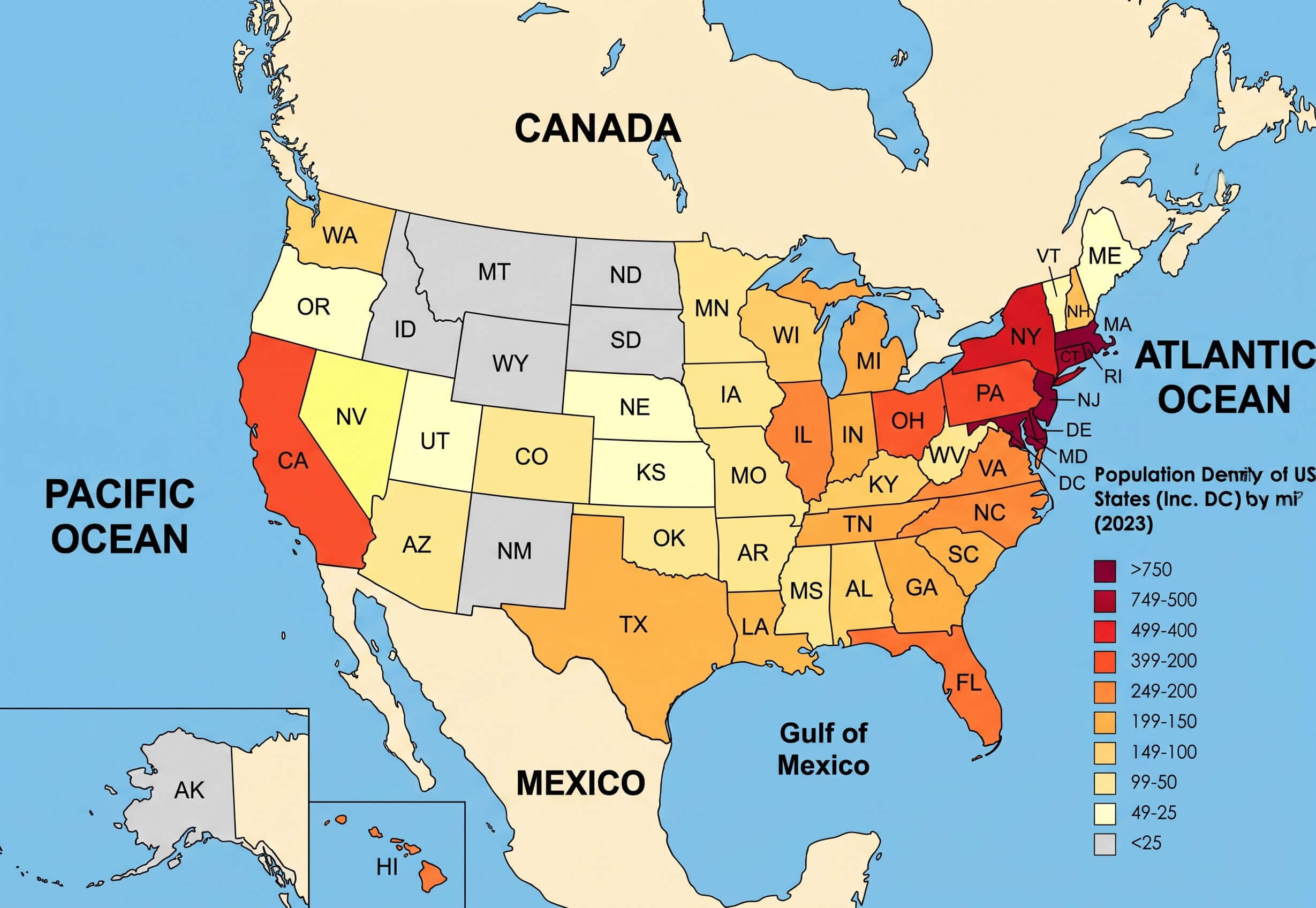
World population density map Global comparison with United States
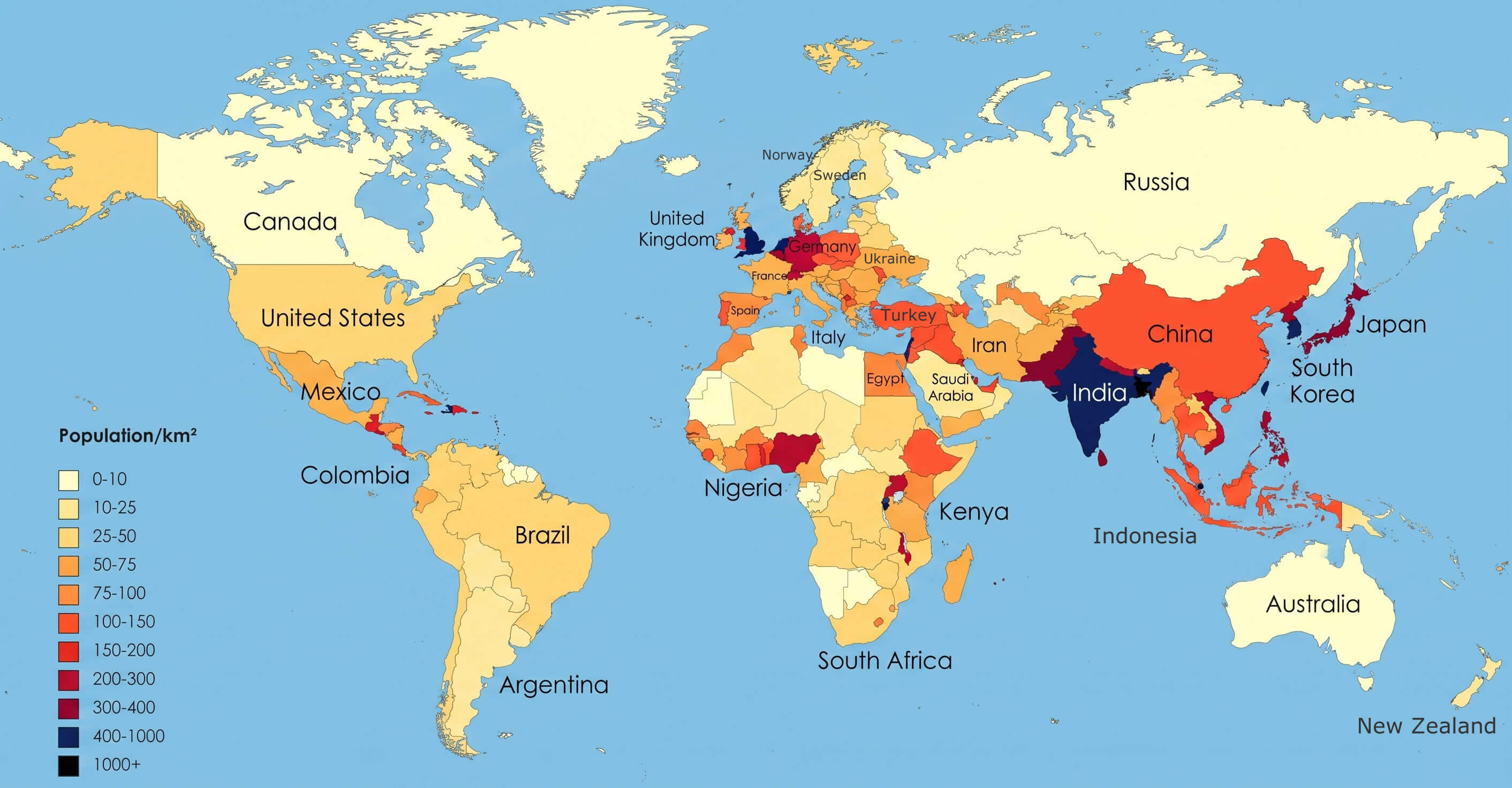
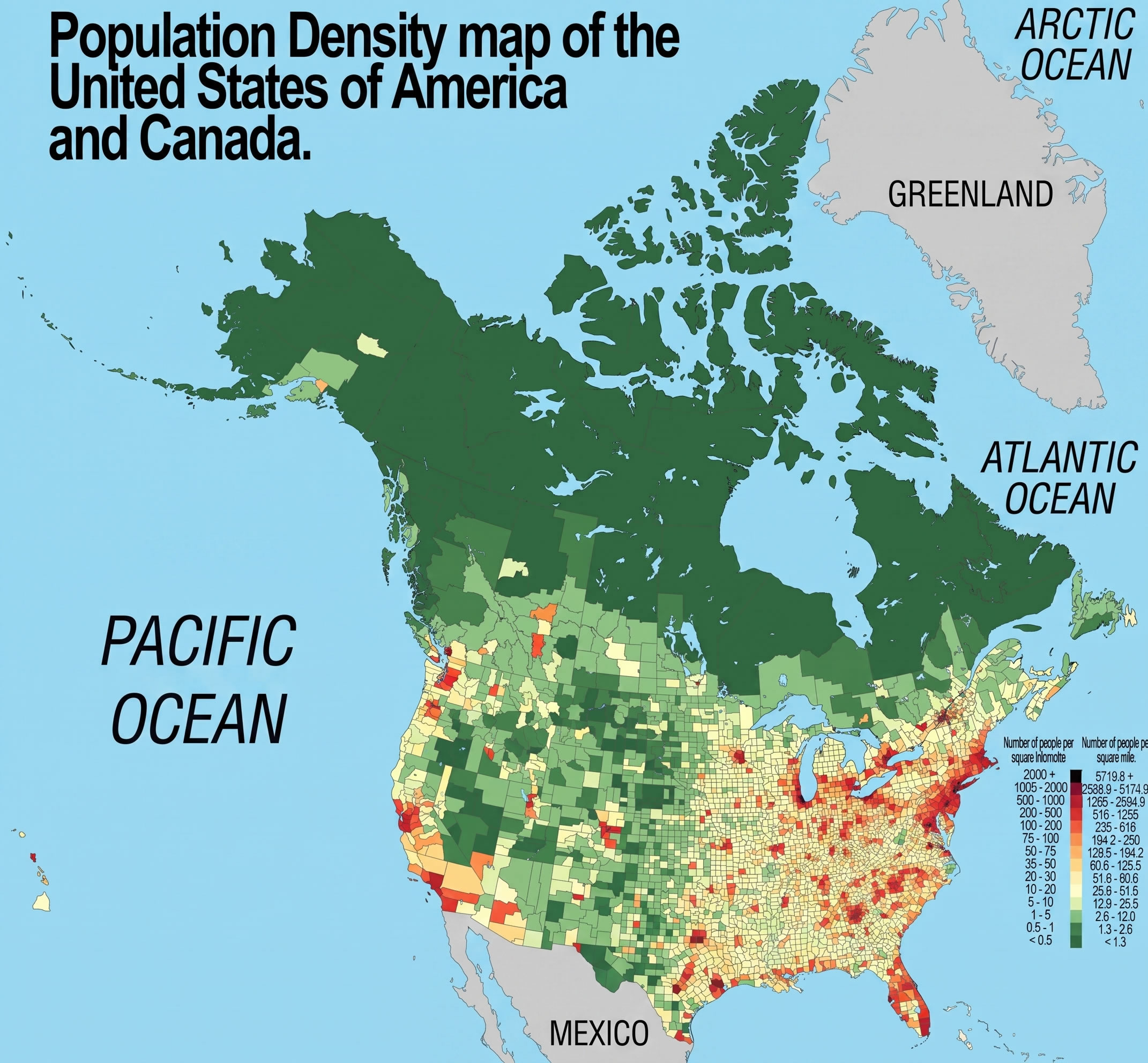
North America population density map US canada
Top 10 most populous US states bar chart
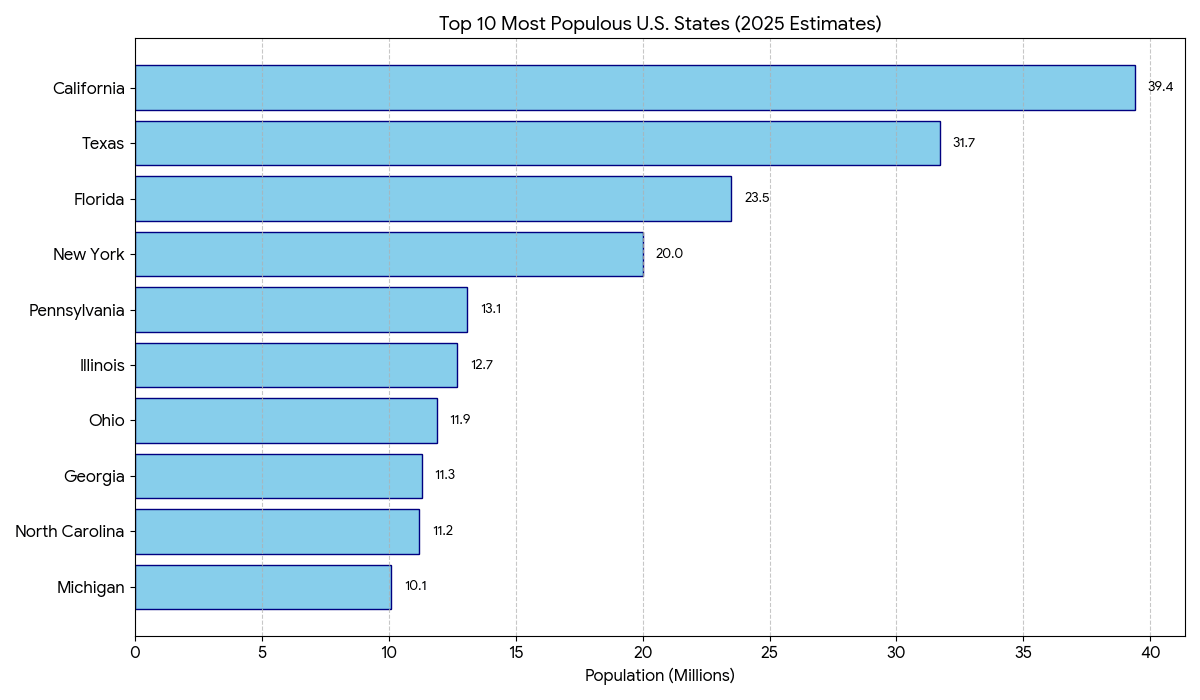
- California is the most populous U.S. state in 2025 with approximately 39.4 million people.
- Texas follows as the second largest state by population with 31.7 million residents.
- Florida ranks third with a population of 23.5 million, showing strong growth in the South.
- New York holds the fourth position with 20.0 million people.
- Pennsylvania (13.1 million) and Illinois (12.7 million) remain key population centers in the Northeast and Midwest.
- Ohio has a population of 11.9 million, continuing its role as a major Midwestern state.
- Georgia (11.3 million) and North Carolina (11.2 million) highlight the rapid growth of southern states.
- Michigan rounds out the top 10 with 10.1 million residents.
- Overall, the data reflects a population shift toward the South and Sun Belt regions.
United States population density heatmap high resolution
Population Growth In The United States between 1790 and 2024
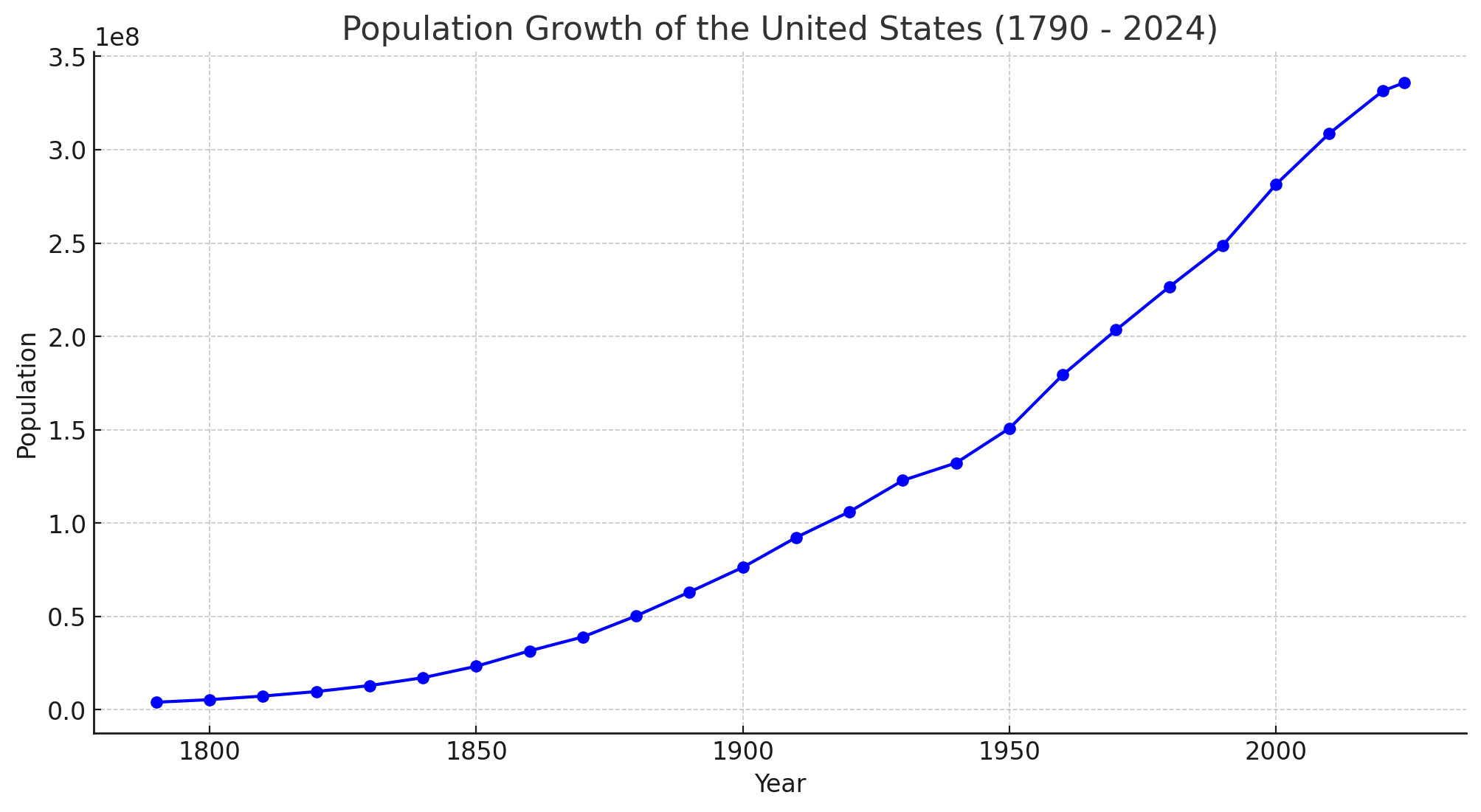 This line chart showing the population growth of the United States from 1790 to an estimated value for 2024. The chart highlights the significant increase in population over time, especially through periods of rapid growth in the 19th and 20th centuries, with continued growth into the 21st century.
United States ethnic demographic composition
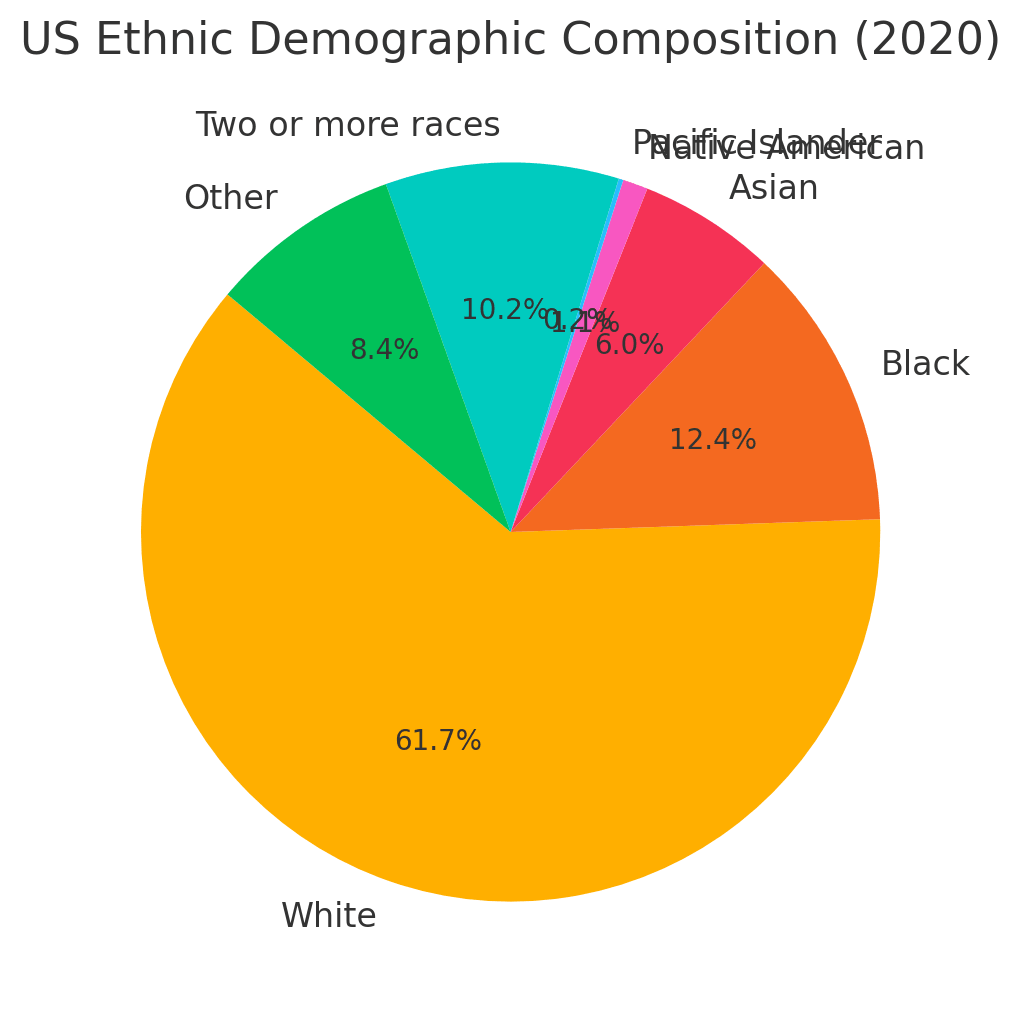
This pie chart showing the ethnic demographic composition of the United States based on 2020 data. This chart provides a visual breakdown of different ethnic groups, showing that white Americans make up the largest percentage, followed by black, Asian and other groups. The diverse racial composition reflects the multicultural nature of the US.
Religious composition of the USA in 2023
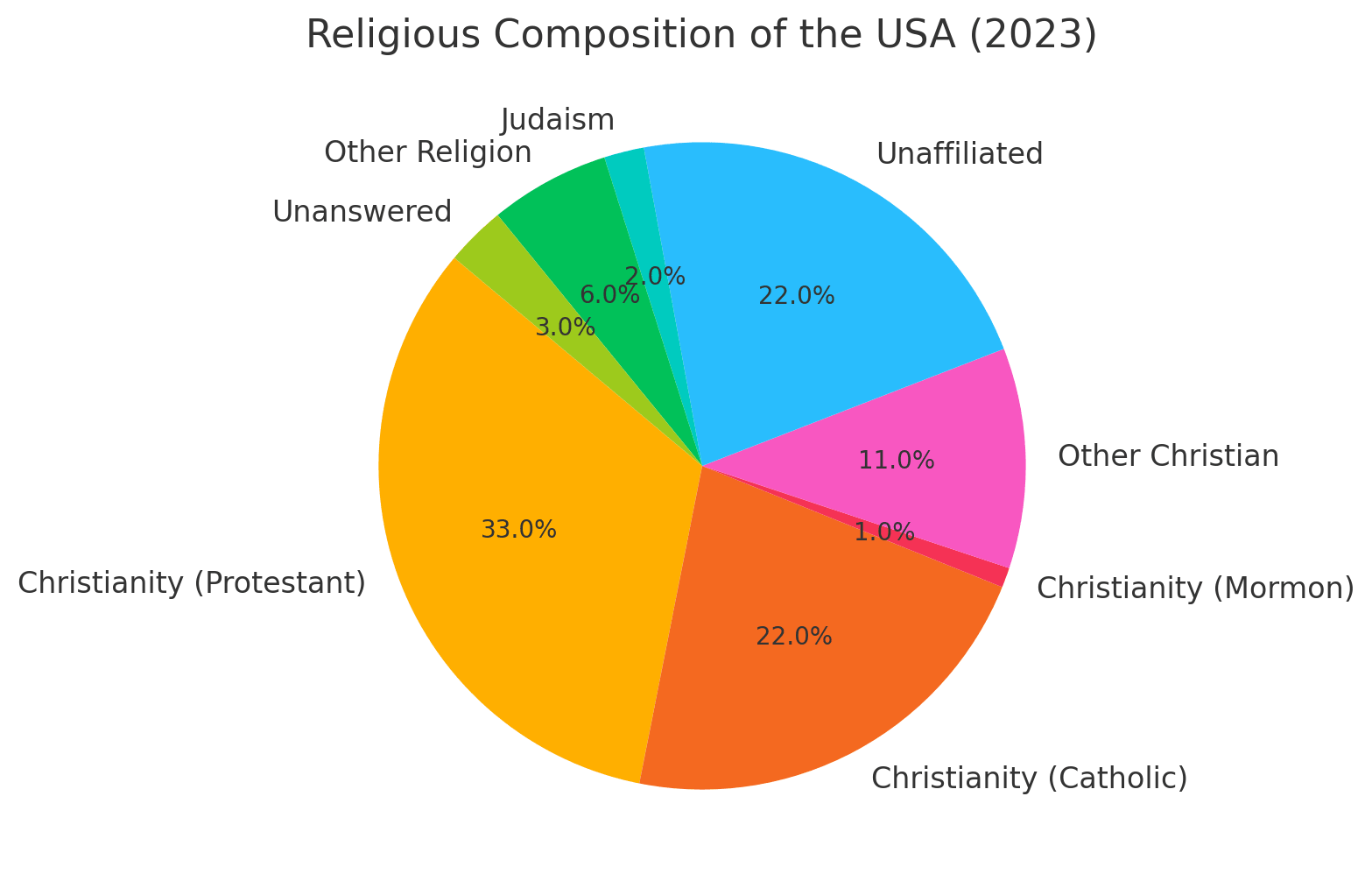
This is a pie chart illustrating the religious composition of the United States in 2023. The largest category is Christianity, divided into Protestantism, Catholicism, Mormonism and other Christian affiliations. The unaffiliated group represents 22% of the population, reflecting the growing trend of people not identifying with a particular religion. Other religions and those who left the question unanswered make up the remaining segments, contributing to the overall diversity of religious beliefs in the US.
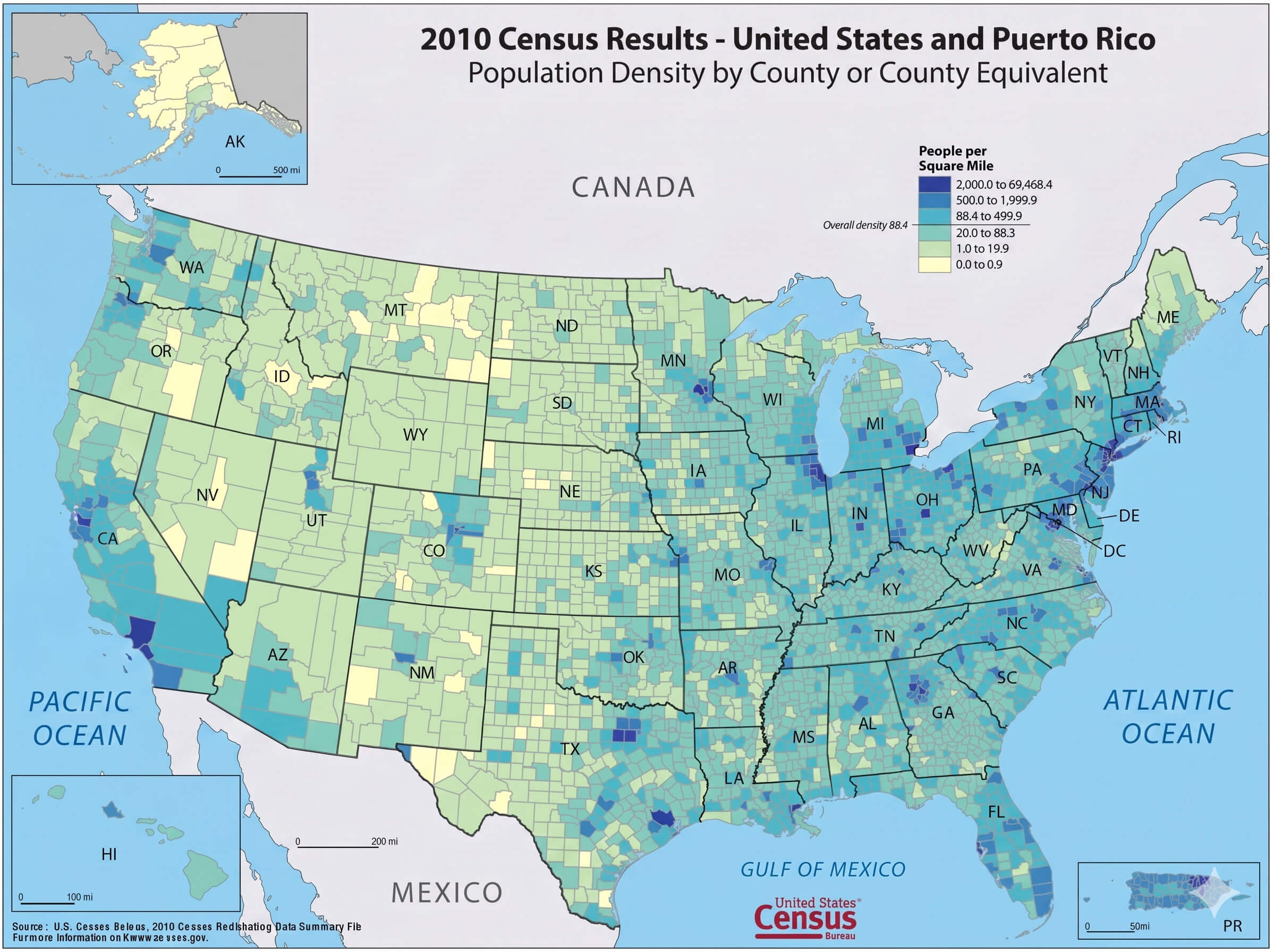
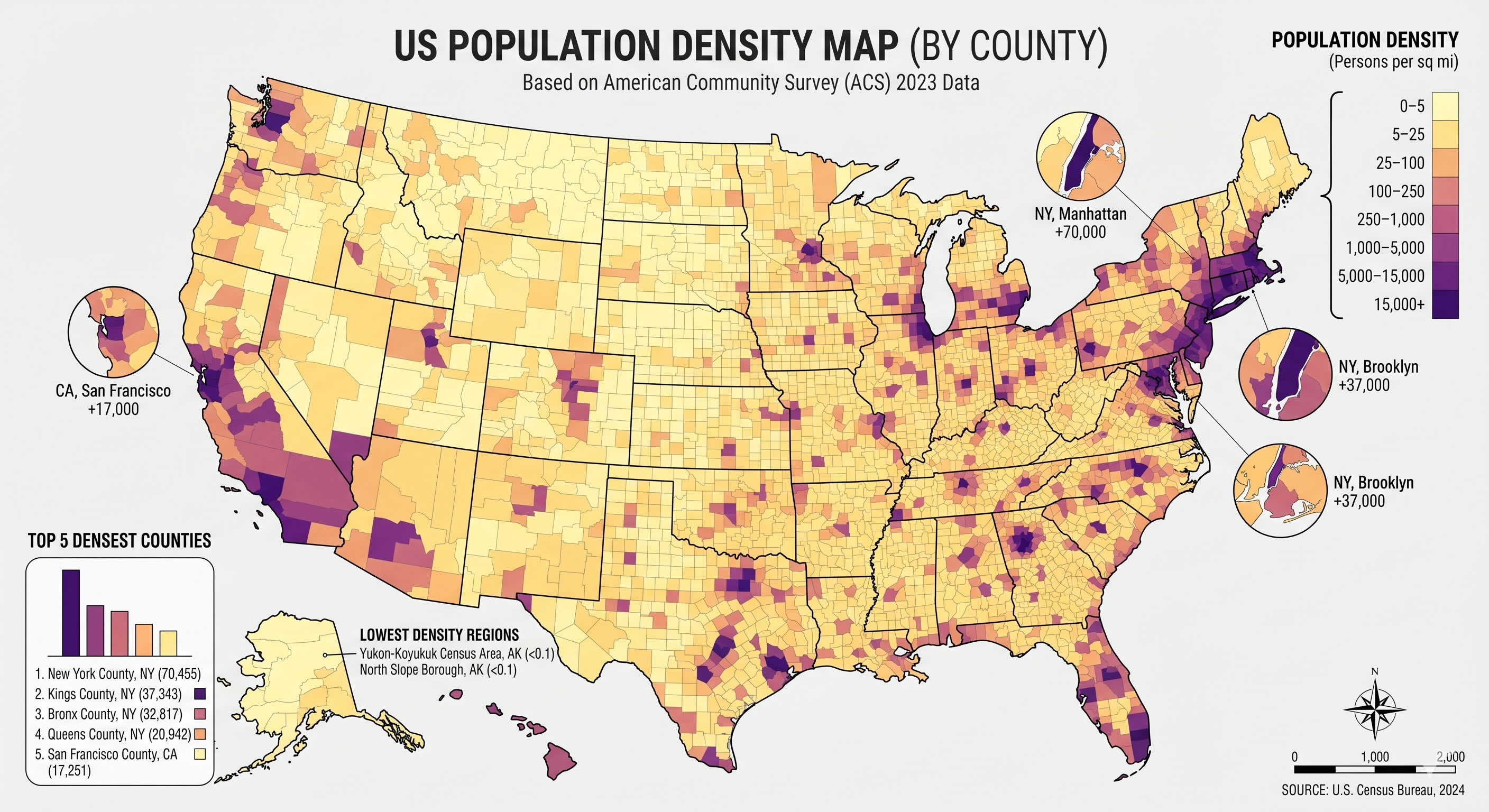
US population density by county 2010 census map
US population density by county orange scale map
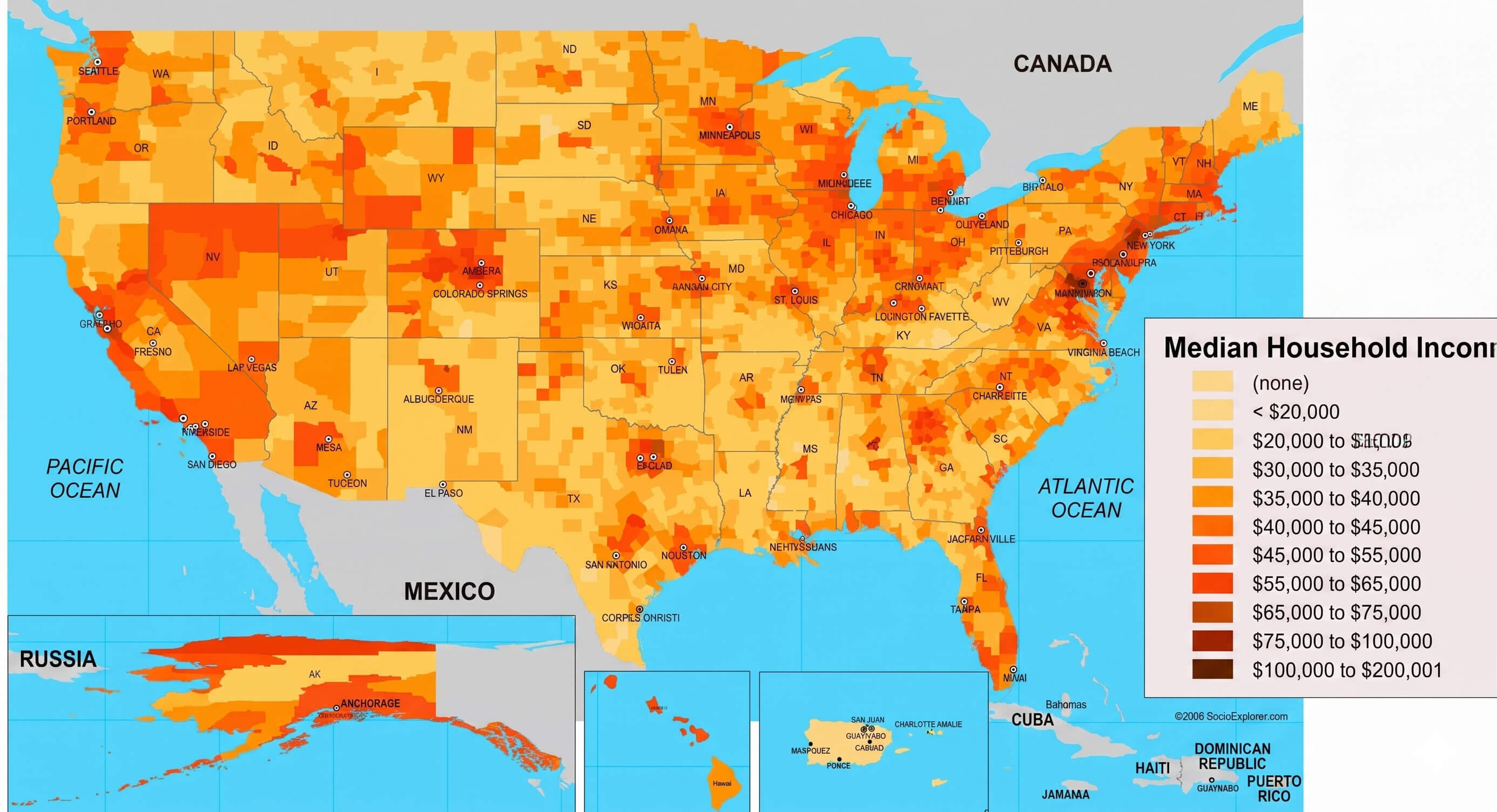
US population density infographic
US population density westward expansion 1940 map
US population growth 1930 to 1940 map
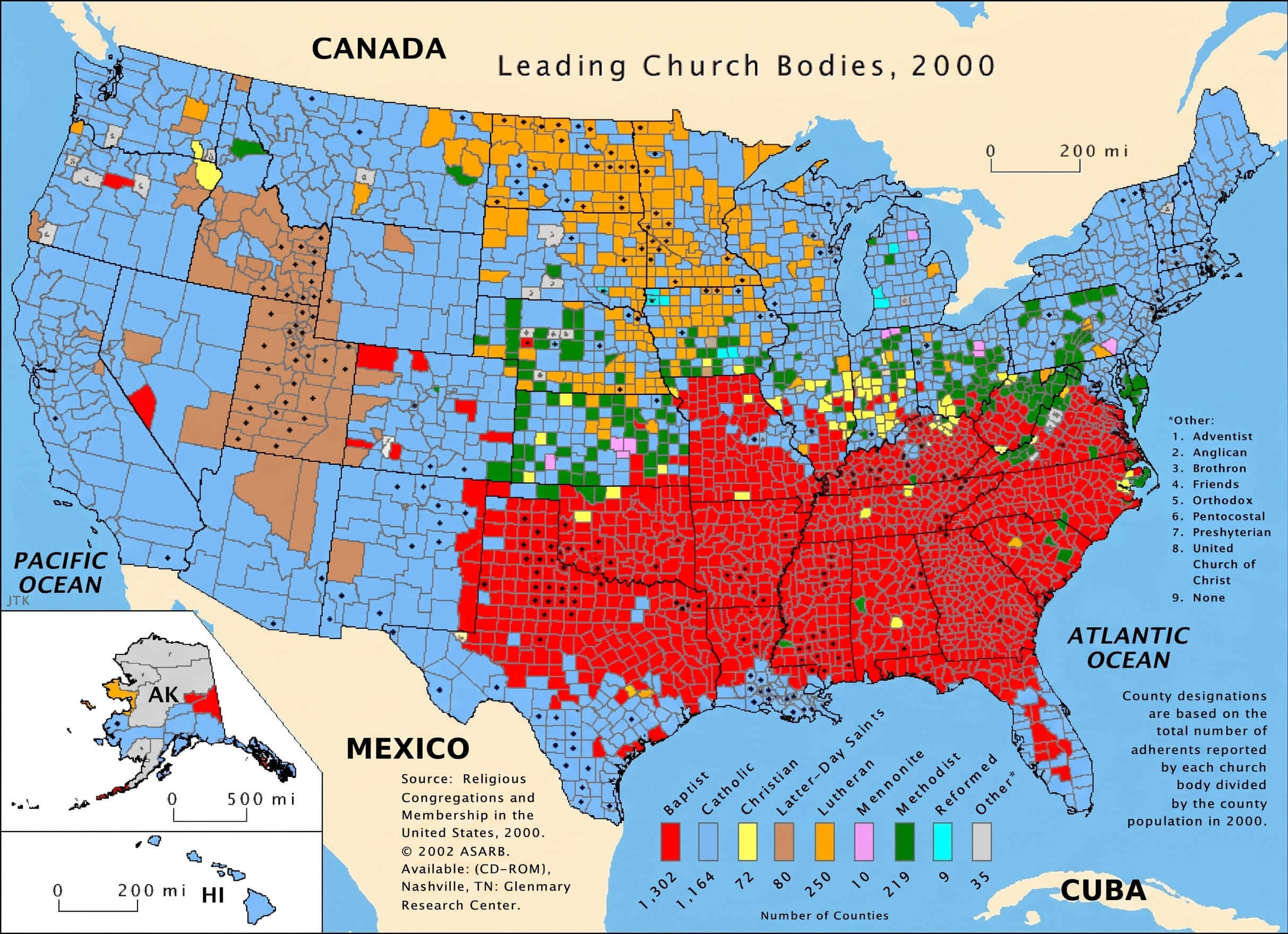
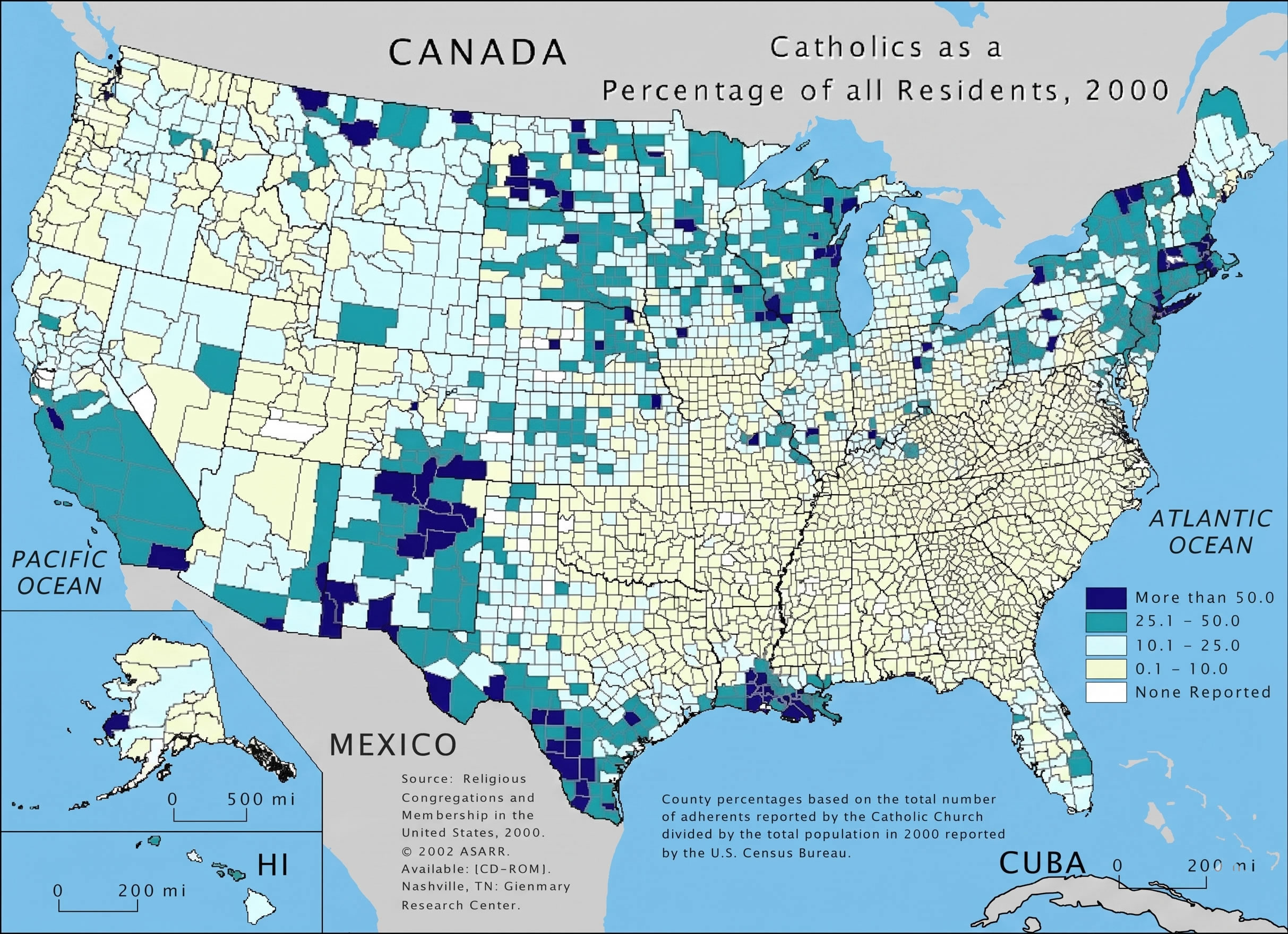
US religious distribution map by region 2000
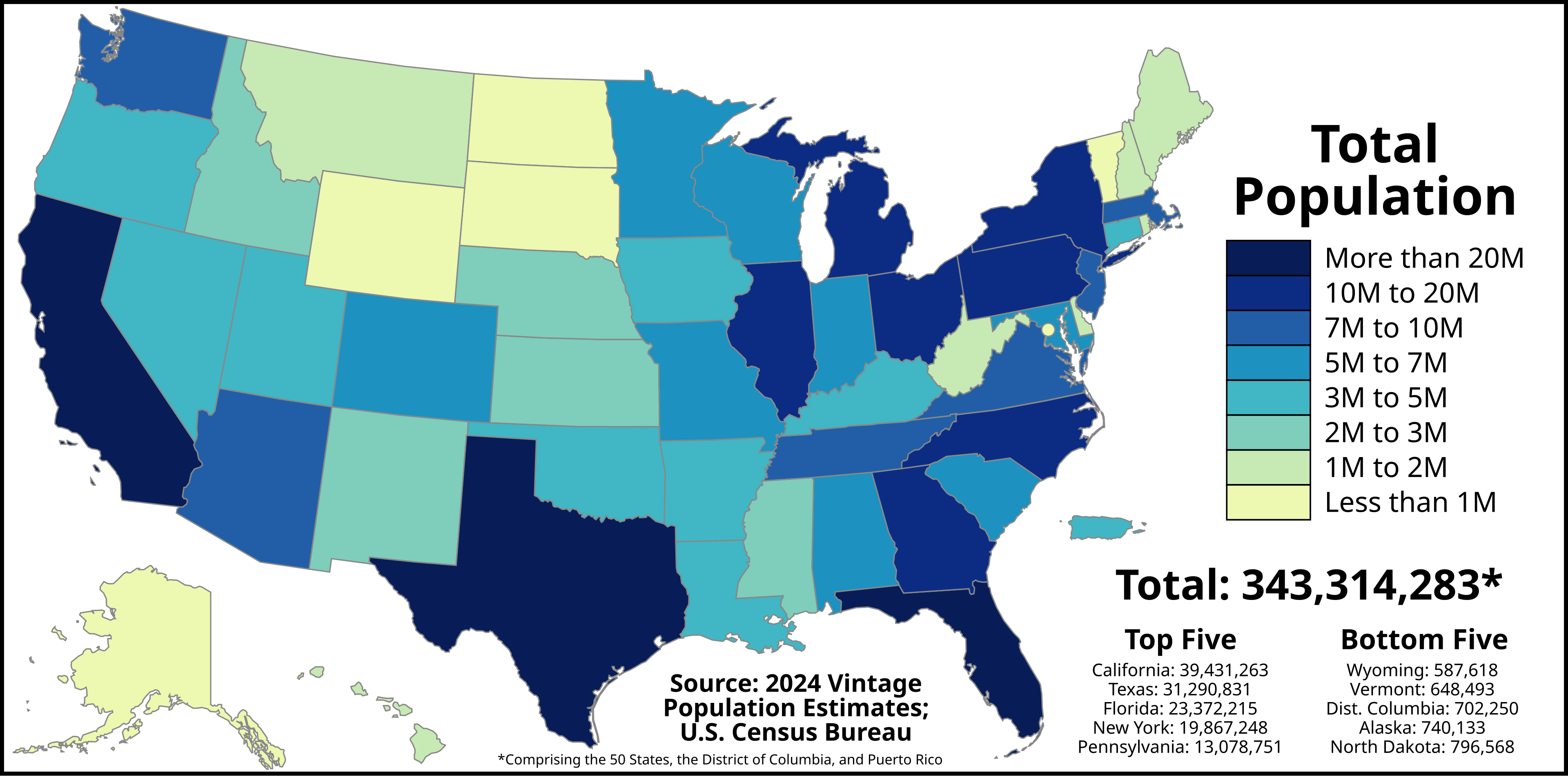
US state population map 2024
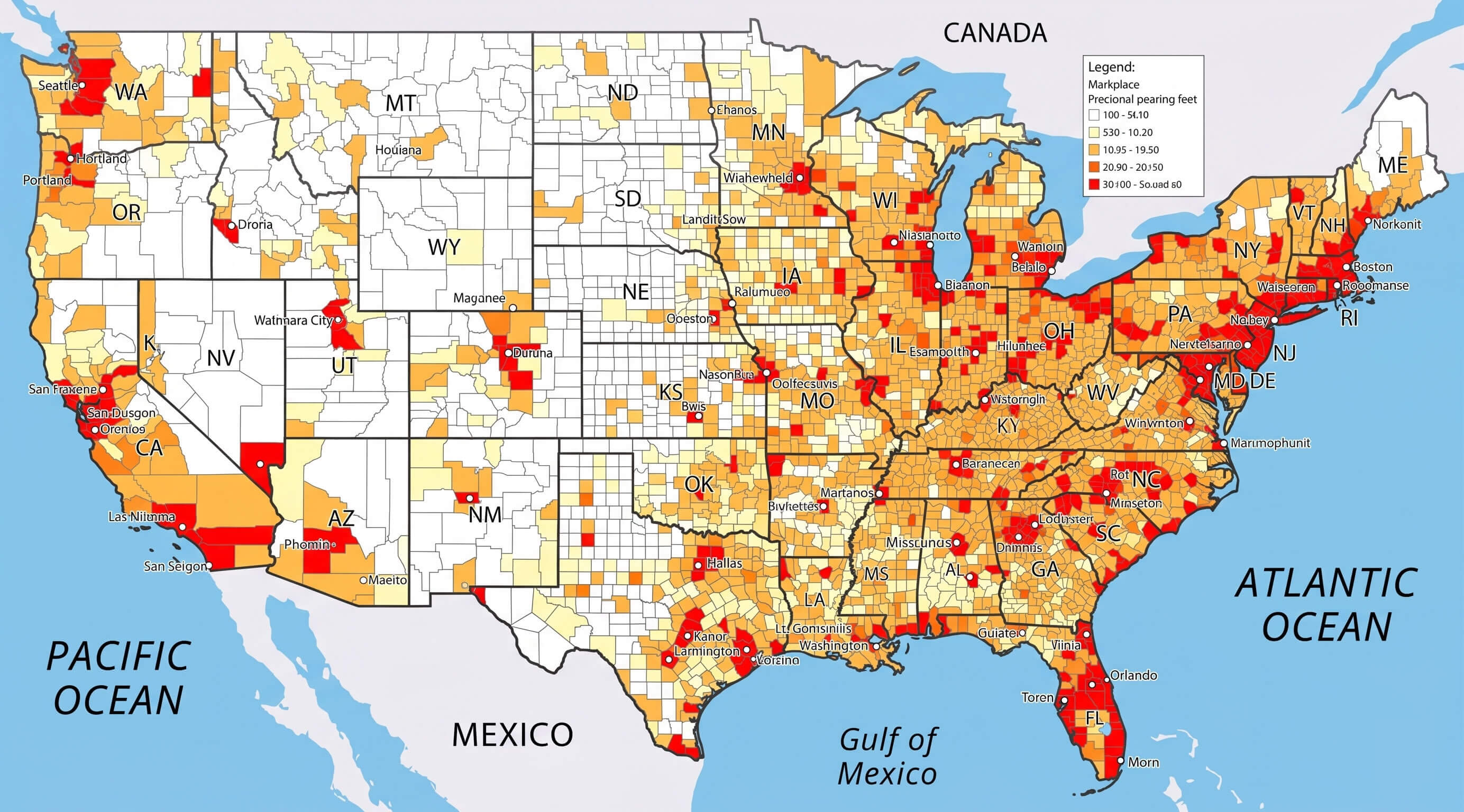
US urban population density clusters map
USA county level population density map detailed
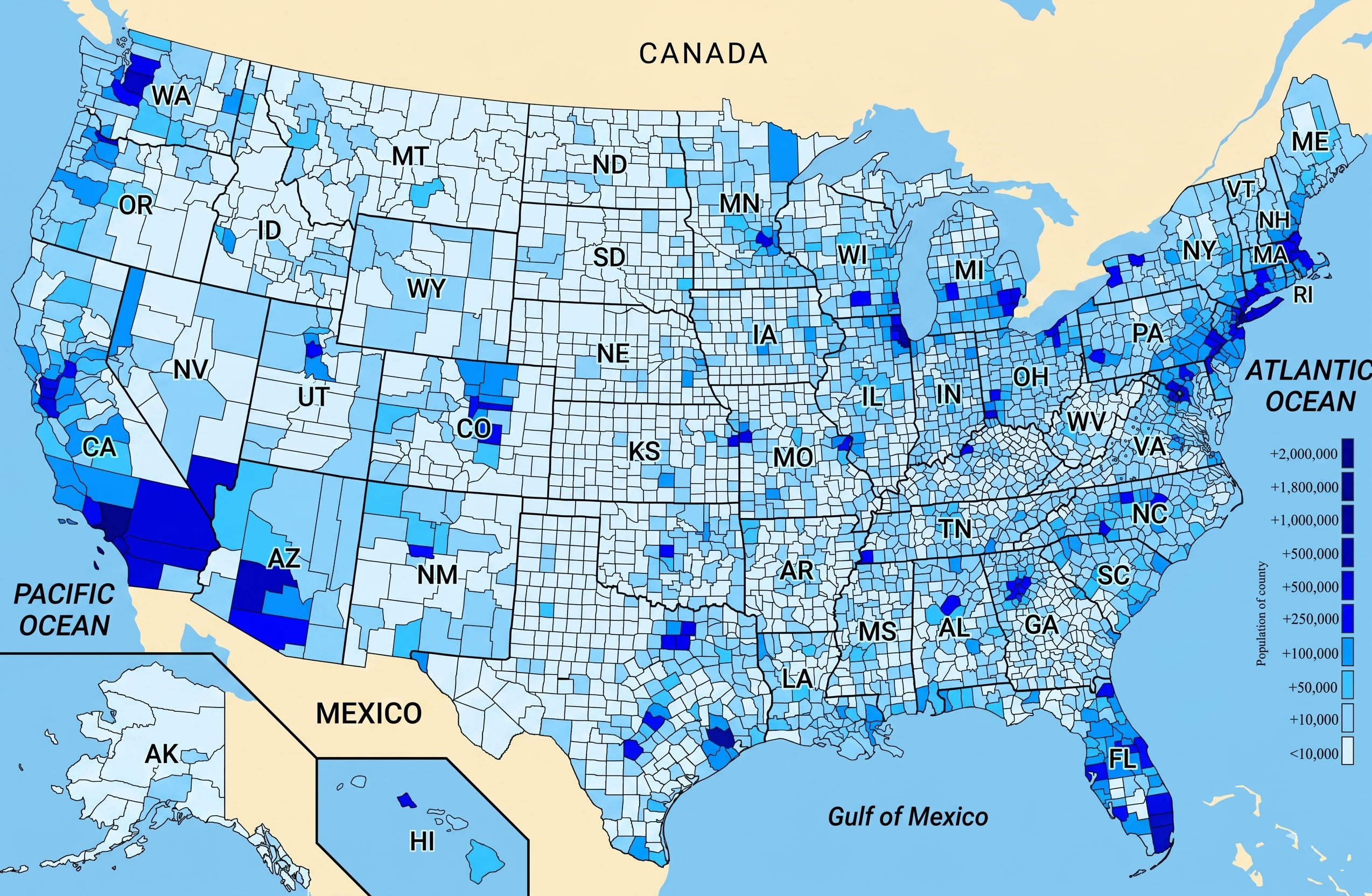
USA population density blue gradient map
USA population density dot distribution map
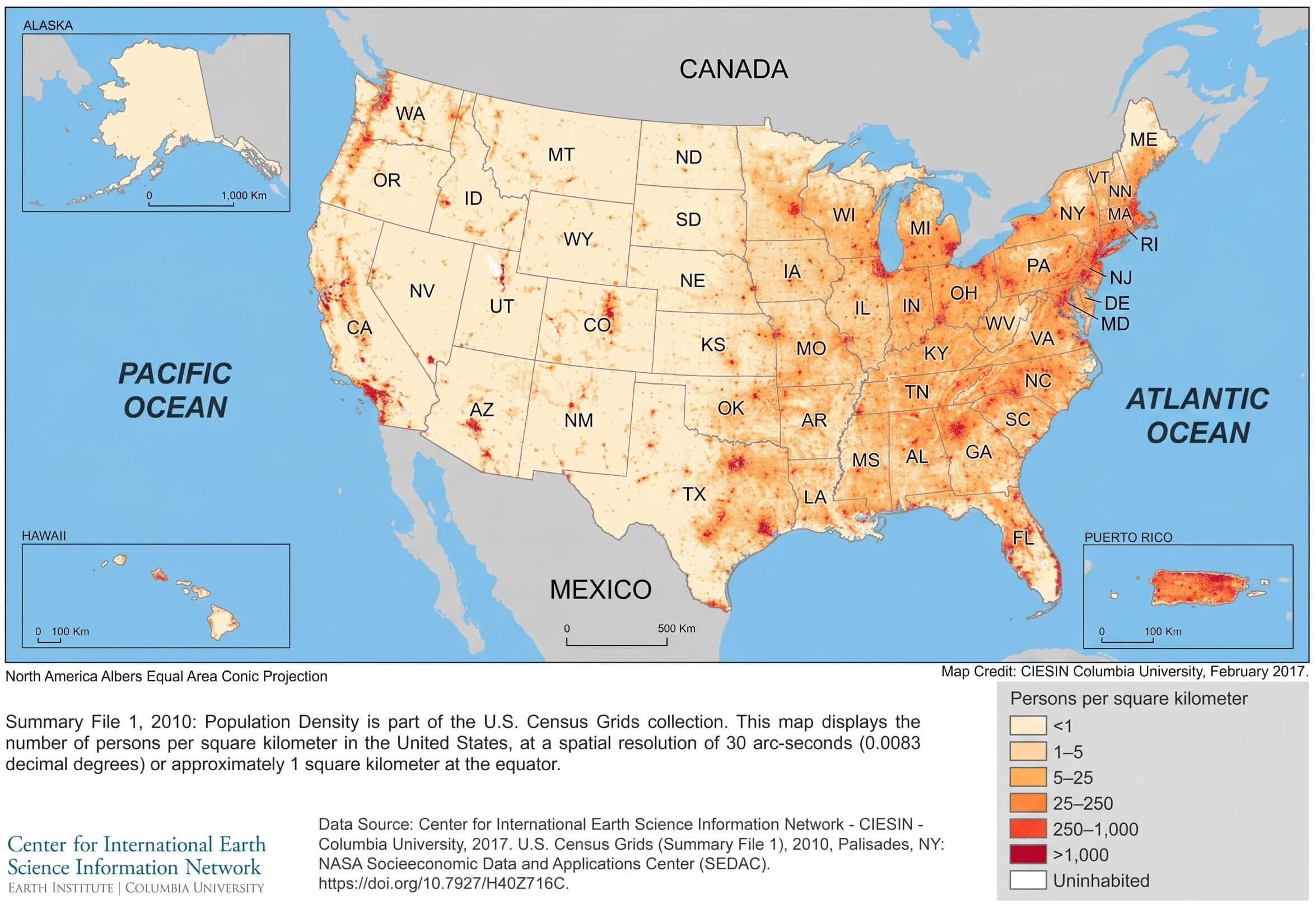
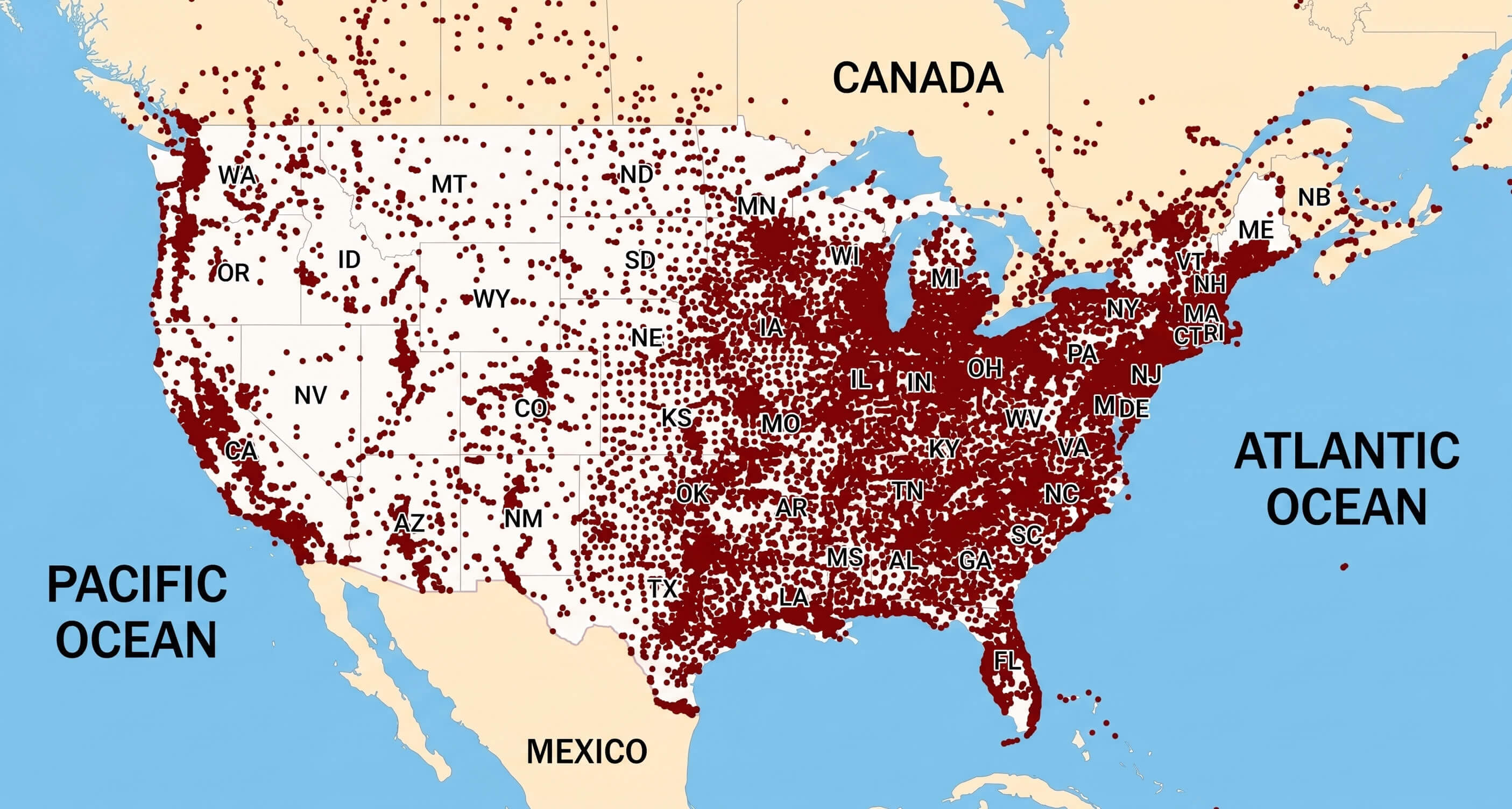
USA population density dot map East Coast heavy
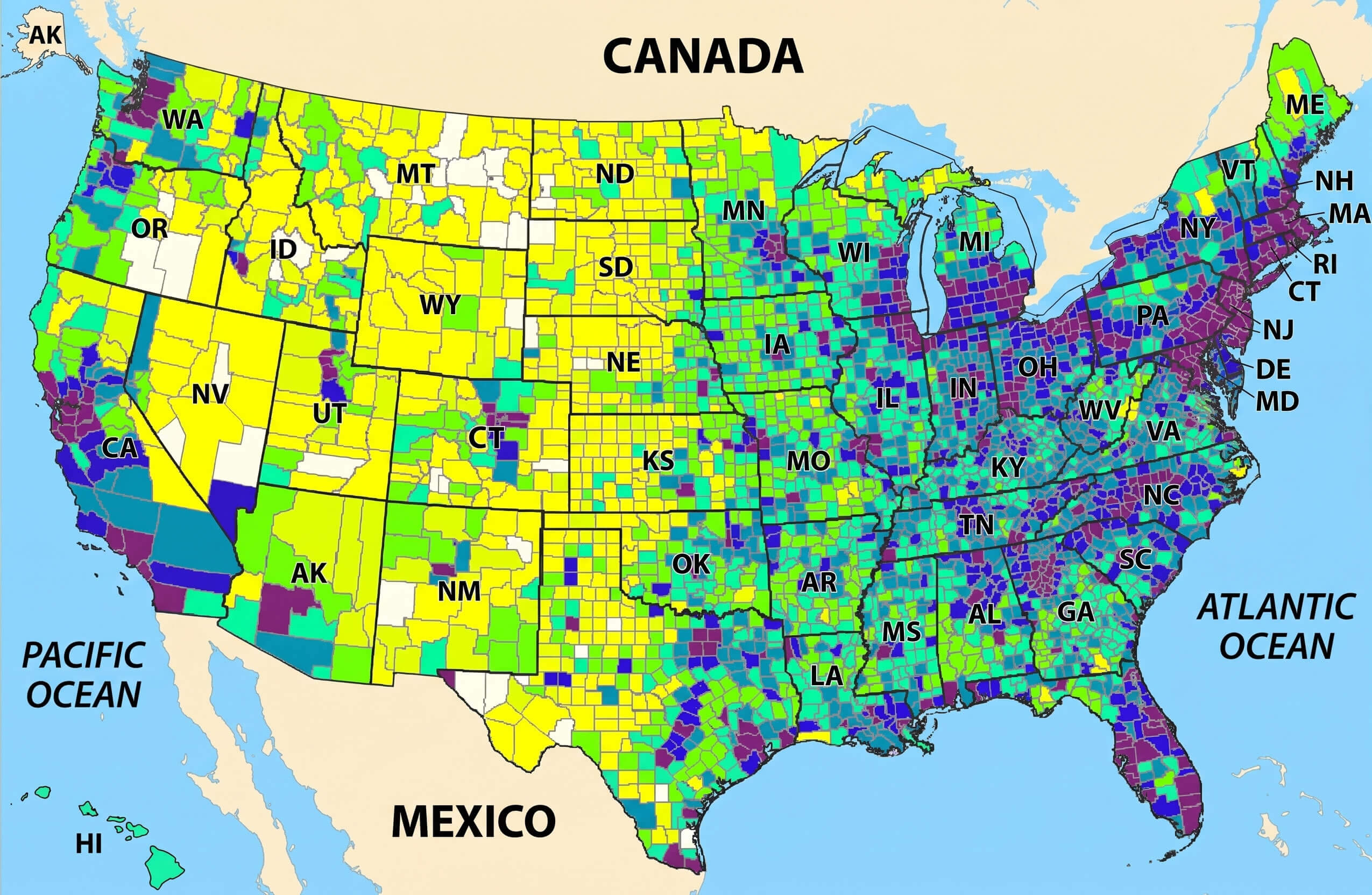
USA population density multicolor choropleth map
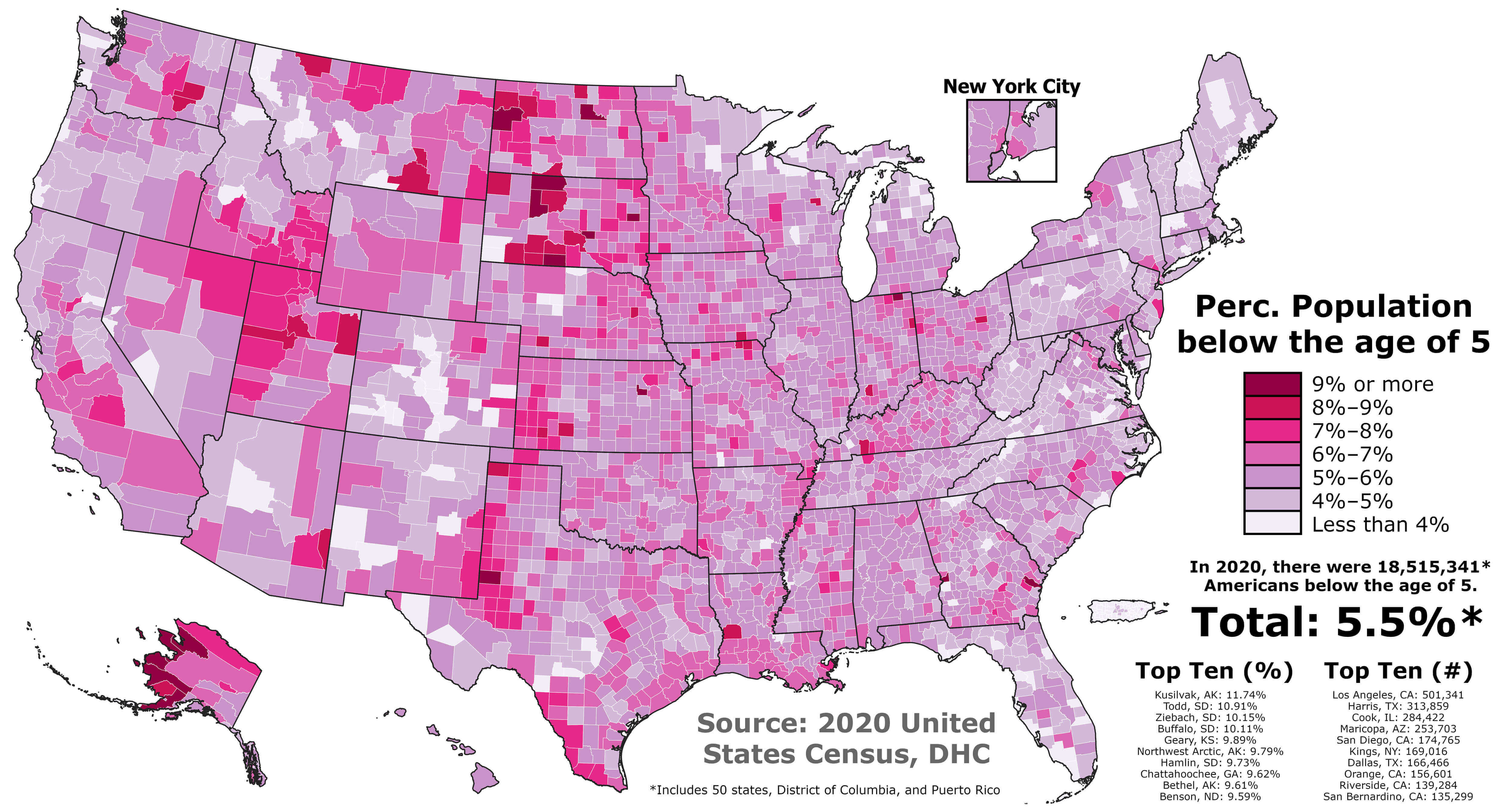
USA population under age 5 map 2020
United States Population Density FAQ
What is the largest race in the world?
The term race is not the most accurate way to describe large human population groups. A better term is ethnic group. According to the provided information, the largest ethnic group in the world is the Han Chinese.
- Han Chinese – approximately 1.4 billion people
- Arabs – approximately 470 million people
- Bengalis – approximately 275 million people
- Hausa – approximately 135 million people
- Punjabis – approximately 130 million people
Answer: The largest ethnic group in the world is the Han Chinese.
What are the largest ethnic groups in the US?
Based on the provided data (2020), the largest ethnic groups in the United States can be categorized by race and origin as follows:
By Race:
- White – 61.6%
- Black or African American – 12.4%
- Asian – 6%
- Two or more races – 10.2%
- Other – 8.4%
- Native American – 1.1%
- Pacific Islander – 0.2%
By Origin:
- Non-Hispanic or Latino – 81.3%
- Hispanic or Latino – 18.7%
Answer: The largest group in the United States is White (61.6%) by race, and Non-Hispanic or Latino (81.3%) by origin.
What are the largest religious groups in the US?
Based on the provided 2025 data, the largest religious groups in the United States are:
- Christianity – 65%
- Unaffiliated – 24%
- Other religion – 6%
- Judaism – 2%
- Unanswered – 3%
Christian denominations:
- Protestantism – 32%
- Catholicism – 20%
- Other Christian – 12%
- Mormonism – 1%
Answer: The largest religious group in the United States is Christianity, representing 65% of the population.
Which U.S. state has the lowest population density?
The U.S. state with the lowest population density is Alaska.
- State: Alaska
- Reason: Alaska has a very large land area but a relatively small population.
- Result: It has the fewest people per square mile of any U.S. state.
Answer: Alaska has the lowest population density in the United States.
Which state is losing population the fastest?
According to the information provided, California is losing population the fastest in terms of total number of people. More than 9,000 people left the state, making it the state with the largest overall population loss.
However, South Carolina had the fastest population growth, increasing by 1.5% and adding nearly 80,000 new residents, reaching a population of over 5.57 million.
Why is the U.S. not densely populated?
The United States is not densely populated because it has a very large land area compared to its population. Although the country has more than 330 million people, they are spread across a huge territory with mountains, deserts, forests, farmland, and rural regions.
Many Americans also live in suburbs and small towns rather than in very compact cities. This makes the overall population density lower than in many smaller countries where people live closer together.
Which US state is overpopulated?
No U.S. state is officially defined as overpopulated. However, California is often considered one of the most crowded states because it has the largest population in the United States.
Other states such as New York, New Jersey, Florida, and Texas may also feel overpopulated in major cities due to high housing demand, traffic, and dense urban areas.
Which U.S. city is shrinking the fastest?
According to the information provided, Detroit, Michigan is the fastest-shrinking U.S. city, with a population decline of 12,302 people.
Other shrinking cities include Cleveland, Ohio with a decline of 5,887 people, Toledo, Ohio with 3,196 people, and Rockford, Illinois with 2,028 people.
What is America’s fastest growing state?
According to the information provided, South Carolina is America’s fastest-growing state.
Census estimates show that South Carolina led the U.S. in population growth, even as overall population growth slowed across the country.
What is the #1 state people are leaving?
According to the information provided, New York is the #1 state people are leaving.
From 2020 to 2024, New York lost 446,814 residents, making it the top outbound state by volume.
What state is 90% white?
According to the information provided, Maine and West Virginia both have a white population share of about 90.1%.
Other states with high percentages include Vermont at 89.9%, New Hampshire at 87.5%, and Montana at 84.6%.
What is the fastest declining state?
According to the information provided, New York is often identified as the fastest-declining state by percentage and total population loss.
The decline is mainly linked to net domestic migration, meaning more residents are moving out of New York to other states than moving in.
Other states with notable population declines include California, Illinois, Louisiana, and Hawaii.
What state has the friendliest people?
According to the information provided, Minnesota is frequently ranked as the state with the friendliest people in the U.S.
Minnesota is especially known for its “Minnesota nice” culture, which is associated with politeness, helpfulness, and welcoming behavior.
Other states often mentioned for friendly people include Tennessee, South Carolina, Texas, Wyoming, and Ohio.
Where is the United States on the World Map?
Show Google map, satellite map, where is the country located.
Get directions by driving, walking, bicycling, public transportation and travel with street view.
Feel free to explore these pages as well:
- US Population Map ↗️
- US Population Density Map ↗️
- United States Population Map ↗️
- California Population Map ↗️
- Canada Population Map ↗️
- World Population Map ↗️
- Europe Population Map ↗️
- Asia Population Map ↗️
- Africa Population Map ↗️
- France Population Map ↗️
- Iran Population Map ↗️
- Muslim Population Map ↗️
- Muslim Population Map in Americas by Country ↗️
- Muslim Population Map in Africa by Country ↗️
- Muslim Population Map in Europe by Country ↗️
- Muslim Population Map in Asia by Country ↗️

